

The Iron Argument


When you read Joe Friel’s ‘The Triathlete’s Bible’, you can’t shake the feeling that it’s about more than just sport and a lifestyle. Yes, it’s a meticulous coach-in-a-book, packed with protocols and checklists. But it’s also a manual for planning and gradually changing yourself. Triathlon, and particularly the Ironman-branded version, has become something like a modern-day equivalent of Bushido for the business community. The same cult of fortitude, self-discipline and a willingness to see things through to the bitter end, but without the three centuries of Japanese esoterica. “I don’t know how to beat others, but I know how to beat myself,” a former samurai turned ascetic once wrote. Experienced triathletes today would echo that sentiment.
Does triathlon (and by this, given the breadth of the term, we specifically mean Ironman-distance training and racing) mix well with yachting? Absolutely, yes. Shared values, a common modus operandi and a similar level of affluence, a love of travel… It’s no surprise the audiences overlap. Plenty of triathletes enjoy sailing, wakeboarding or racing speedboats, and just as many yacht owners test their mettle in the swim, bike and run.
Which raises a very practical question: can you do triathlon and yachting concurrently, or do you have to choose one over the other? Surely you have to pause your training if you’re going to sea for an extended period? Not at all. Preparing for a triathlon aboard a yacht is not only possible, but can be a unique experience that actually gives you a competitive edge.
Triathlon on a Yacht
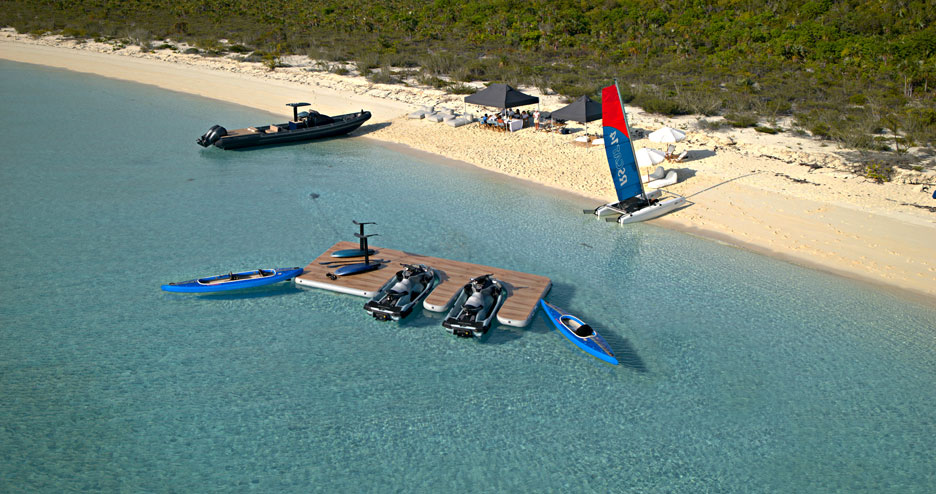
The main advantage of a yacht is the ability to swap training in a dreary autumn or winter (when the sun barely peeks from behind the clouds and it gets dark early) for the idyllic conditions of the Mediterranean or the Caribbean. Instead of laps in a pool, you have the open sea – both your greatest ally and your capricious opponent. Breathtaking views of romantic towns or secluded coves keep long swims from ever getting boring.

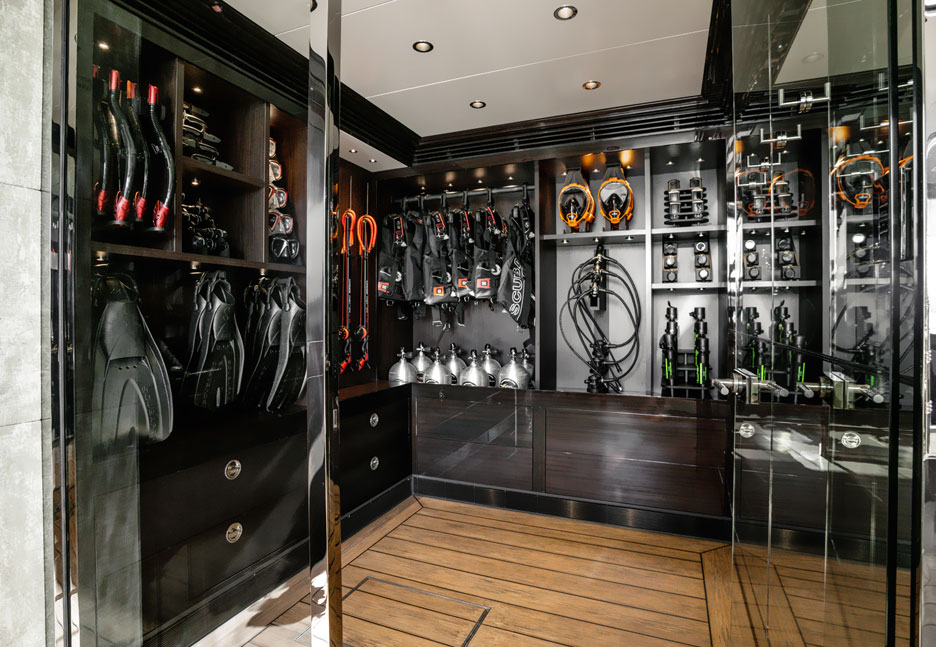
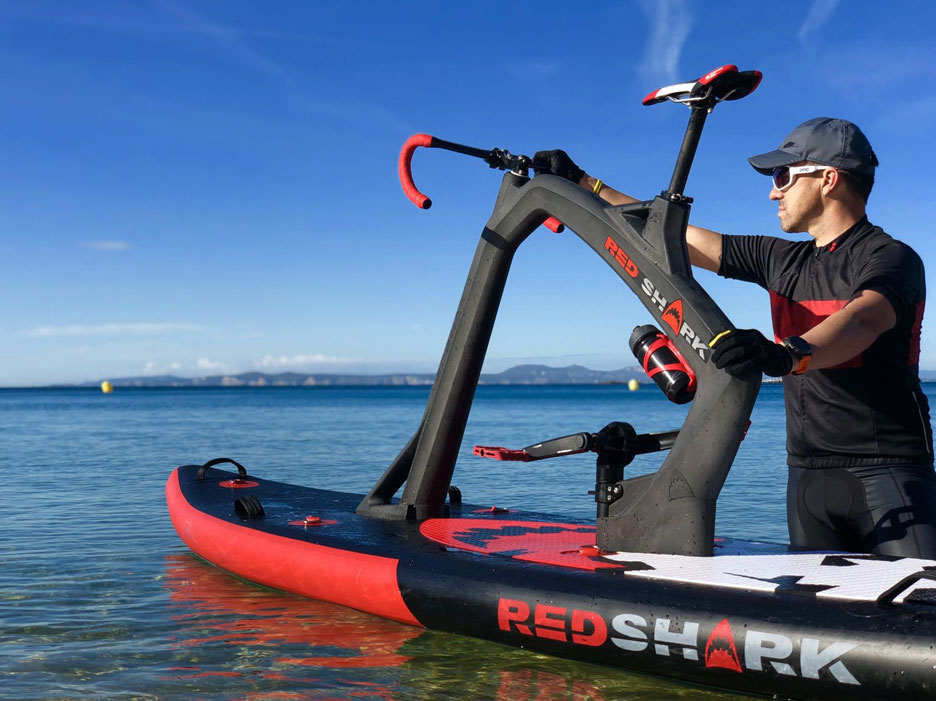
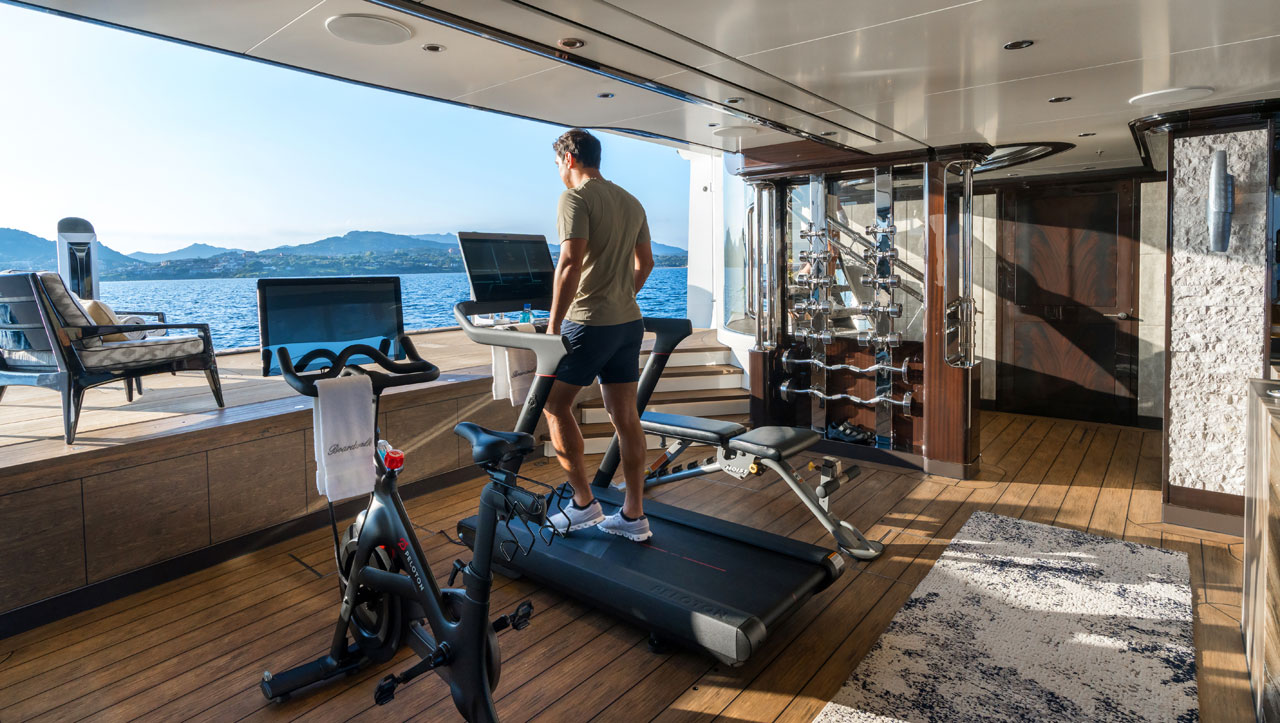
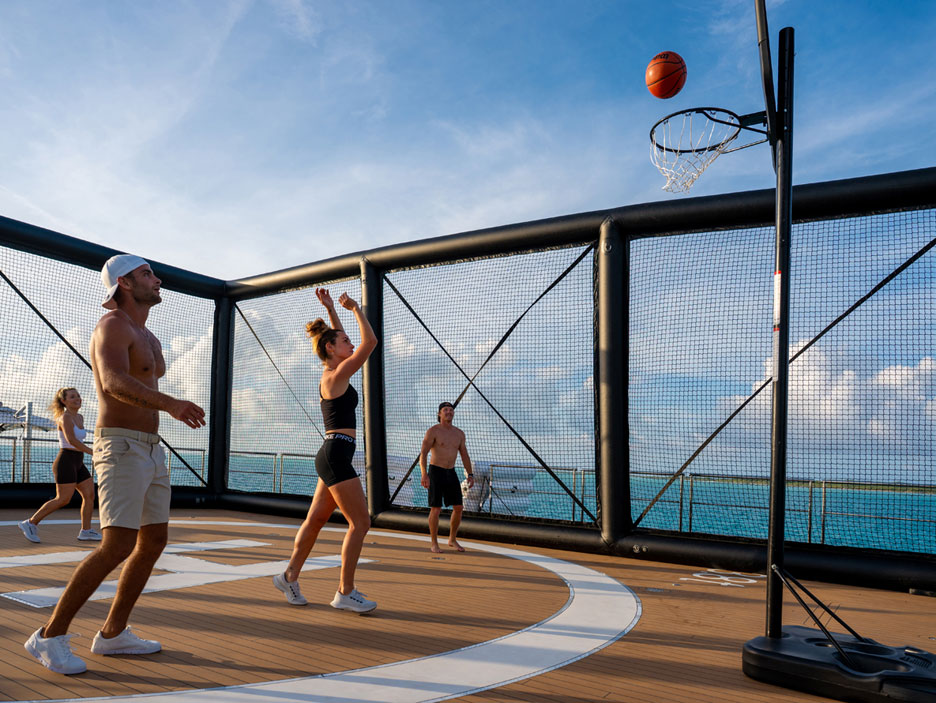
Cycling and running? You can stop at different marinas and plan exactly the routes that interest you – maybe one day a hilly climb, the next a flat stretch. The open sea poses no problems either. You can install a turbo trainer and a treadmill even on a large cruiser. That’s without mentioning yachts over 20 metres, let alone super- and mega-yachts, where space for a covered gym is often included at the design stage (for example, in the beach club on the lower deck or next to the master cabin), or deck space cleared for exercise equipment in the fresh air (usually on the sundeck or aft part of the main deck). Install high-quality trainers that can connect to virtual routes. If space is tight, a compact spin bike makes an excellent alternative. Focus on interval training and power development. The deck itself can be used for high-intensity interval training, box jumps, lunges and other exercises that simulate running load.

Managing your nutrition on a yacht is straightforward – whether you cook yourself or brief the chef. And sleep at sea can be far better than in a bustling metropolis.
For a modern yacht of 40m+, a massage room is practically standard, and often a hammam and sauna too, to aid post-exercise recovery. In principle, if space and desire allow, you could kit out a fitness centre and beauty salon on board that would rival anything you’d find on land in some charming but out-of-the-way port. So much so that several yachts already feature cryosaunas, with owners going to extra safety lengths just to store liquid nitrogen on board.
Alexey Panferov,
First Deputy CEO of the mining company Eurochem
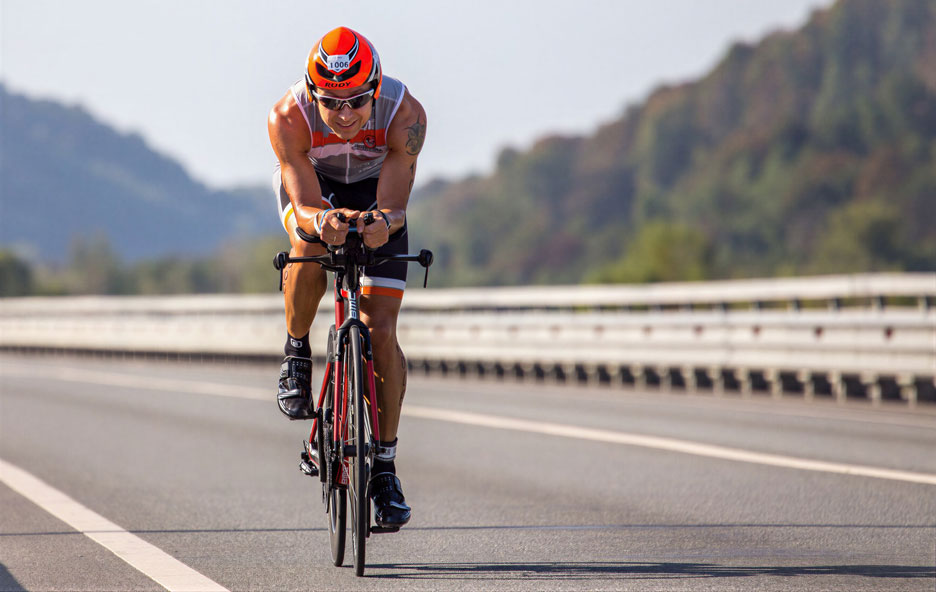
Alexey Panferov is one of those who pioneered the Ironman movement in Russia and remains one of its key enthusiasts. His record includes: 15 Ironmans, 1 Ultraman, over 20 half-Ironmans, over 60 marathons, 3 ultra runs, and climbing Kilimanjaro in 8 hours 40 minutes. His photo features on the cover of the first Russian edition of ‘The Triathlete’s Bible’ (for which he also wrote one of the forewords).
Panferov notes the many similarities between the lifestyle of a triathlete and that of a sailor – a communion with nature, the freedom to travel the world, and a community of like-minded people:
Triathlon bears no relation to running a marathon or cycling event in a big city. What do people see when they pound the asphalt? Urban or suburban sprawl. When you combine swimming, a long bike leg and a run, you inevitably find yourself out in nature. Triathletes, like sailors, are engaged in conquering the elements – wind, rain, everything. The start goes ahead whatever the weather! Overcoming these hardships feels like a rite of passage; you become part of nature, almost a wild animal. All the colours of the world seem brighter.
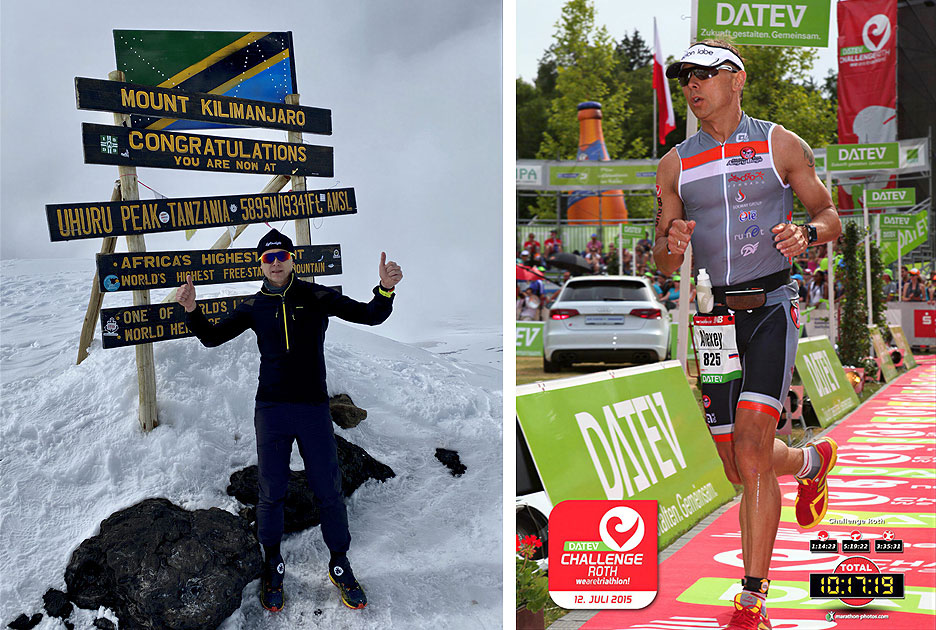
Triathlon is also an initiation into a circle of kindred spirits. According to US statistics, the average annual income of an Ironman participant is $140,000, and the cost of taking part in a single race is $5,500. This is a sport for relatively affluent people who have both the time and the means to travel the world.
Traveling from one triathlon to the next, you constantly discover new things. It’s a chance to visit volcanic Lanzarote or the island of Cozumel, steeped in Mayan history (with the famous Chichen Itza within three hours for full immersion). To race among the lava fields of Lanzarote, which hosts Europe’s toughest race.
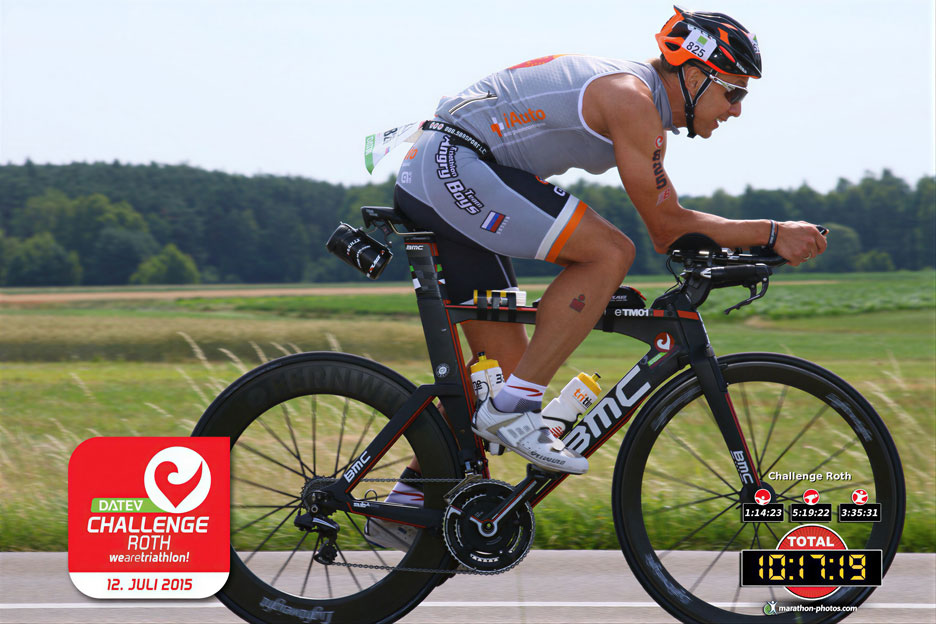
It’s also a chance to feel the support of your family and even complete strangers. The best organisation and simply an incredible atmosphere, in my opinion, is in Germany during Challenge Roth, held every July in the Bavarian town of Roth. There, 250,000 spectators line the course to cheer the athletes on, and on several bike climbs, the riders pass through a living tunnel where everyone is rooting for you.

Generally speaking, triathlons vary enormously – there are plenty of short races that are even easier than a half-marathon. But when it comes to a full Ironman – 2.4-mile swim, 112-mile bike, 26.2-mile run – that’s a different beast entirely. It encompasses everything: endurance, ambition, keeping up with new trends, and above all, it’s a thrill, even an ‘addiction’ (though this is hardly about health or work-life balance).
On the other hand, there’s a lot of hype and commercialism around Ironman. Many people just want to tick the box, for the social scene or to feed their ego. Moreover, if you dig a little, you’ll find that most of them aren't doing the full distance, but the half. (I have nothing against that, by the way – something is better than nothing). The popularity is insane, but the quality of races isn't increasing. You simply can’t register in time; everything sells out in seconds. But even so, a filter exists that weeds out the truly dedicated.

Where to Train?
In Moscow, Krylatskoye is a good training hub (even in winter). There are many more suitable places in summer, but honestly, Moscow isn't ideal for full-scale training. It’s a huge city without a culture of being friendly to cyclists. Sochi is much better, and especially Crimea – simply a mecca for trail running.

Leonid Kazinets,
President of the development company "Barkli"
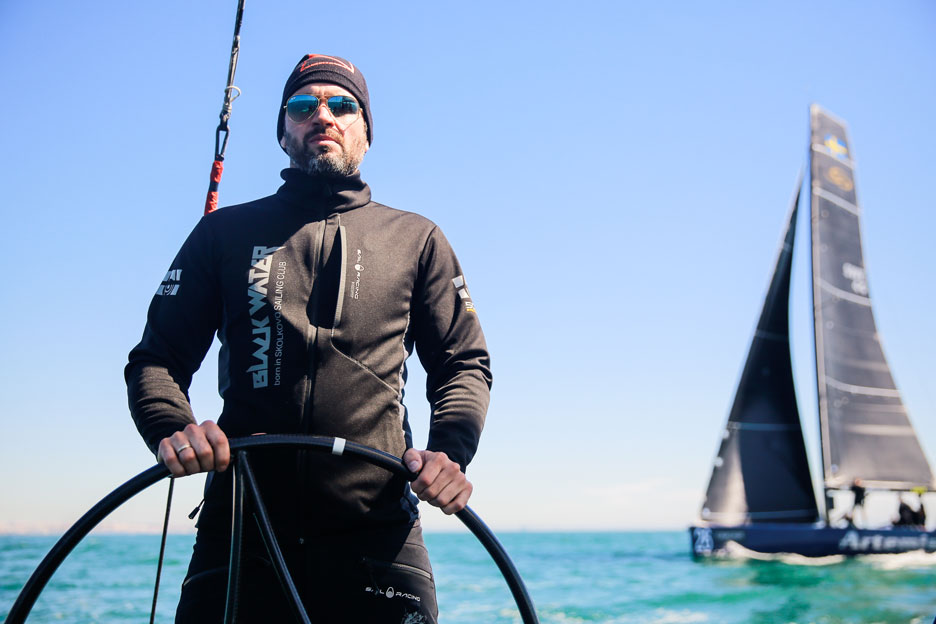
I’ve done a lot of sport. And by ‘a lot’, I’m not just talking. I raced high-speed yachts and sailing catamarans – Olympic classes, single-handed. Candidate Master of Sport in mountaineering. Candidate Master of Sport in rock climbing. International Master of Sport in parachute acrobatics. Multiple Russian champion, European and World prize-winner, twice in the Guinness Book of Records. For me, sport is about mastering your body and your fears under tight deadlines.
When I left the national squad, I had time for new challenges. First marathons, then triathlon. It fitted my rhythm perfectly: a symbiosis of activity, exertion and travel. You train different muscle groups daily, but the main thing is learning to allocate resources between running, cycling, swimming and general fitness. Pure project management.
It’s important to understand: Ironman isn’t about elite sport, it’s about amateur fitness at the highest level. An Olympian pro would destroy any age-grouper even without training. But we aren't racing against them; we're racing against our own effectiveness.

For those accustomed to calculating risks, I’ve identified three key aspects.
First – health as an asset. Imagine climbing an 8,000-metre peak without oxygen. At altitude, any weakness – teeth, back, stomach – will show itself in mountaineering. That’s why climbers do a total body audit before an expedition. The same rule applies to triathlon. Before serious training, get a thorough check-up, identify old injuries. Then settle into a routine: full diagnostics, clinical and biochemical blood tests, cardio check every three months. It’s far easier to catch any problem at the ‘pre-sales’ stage than to deal with the consequences. Even a simple muscle strain can derail your schedule for a long time.
Second – proper technique. To get results and avoid wrecking your joints and health, you need correct biomechanics: efficient running, a good bike fit, proper pedalling technique. And the most complex technique – swimming. Many treat it as a warm-up and lose the most ground there. A mistake. Those who invest in swimming technique gain a huge advantage, saving energy during the swim leg and starting the bike fresh. And gear: choosing the right shoes, insoles, bike fit – this isn’t a luxury, it’s injury prevention. Incorrect biomechanics equals inefficient use of your equipment (your own body).

Third – priorities and time management. Triathlon is a hobby. The Iron distance requires iron discipline. Business trips, flights, disrupted sleep and diet – all are obstacles. Before diving into this world, honestly ask yourself: what are you willing to give up? Even other sports, if they’re injury-prone, might have to be frozen. It’s a question of risk management.
You can start from any level, even from scratch. But without a professional sports background, jumping into long distances quickly is harmful. Triathlon is long not just in distance, but in the time and methodology required to prepare for races. Don’t start if you’re not ready to commit the resource. There’s a good saying: ‘Growth is never instantaneous’. Stay disciplined, be patient, and let time work for you.
If you do it sequentially and patiently – swim, pedal and run to your heart’s content. And enjoy it. That’s what it’s all about.
Alexander Zaitsev,
CEO of Atomic Capital
Triathletes used to be a pet peeve of mine. They’re so self-absorbed… They need their medals, photos, podiums, that feeling of being a star. Yes, many have every right to be proud of their professional achievements, but why drag sport into it? That’s what I thought when I decided to prove by my own example that Ironman isn’t that hard, and that any reasonably fit person can finish.
By then, I was the Moscow champion in gorodki (a form of skittles), had spent my youth in semi-basement gyms training with 1990s gangsters, practised Muay Thai and Kyokushin karate, and had progressed to the RC44 sailing class. I’m an ‘achiever’ by nature, and triathlon became that bar I wanted to reach, because until then, sport had come easily to me.

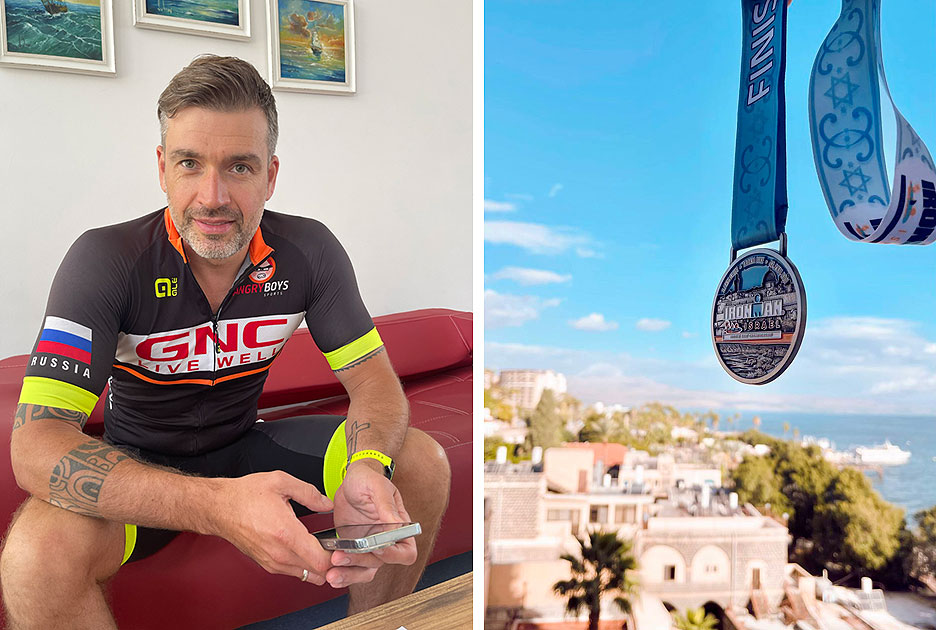
To start, I decided to consult an experienced triathlete and called Vladimir Voloshin, co-founder of IronStar. He explained I had three paths: train on my own, with a personal coach, or with a team. I chose the third option, and he suggested: “Try Angry Boys.” This community was founded by well-known venture investor Leonid Boguslavsky, a legend in triathlon who started training at 62 and achieved remarkable results, along with financier Alexey Panferov, one of the first to popularise triathlon in Russia. It includes many outstanding amateur athletes from the world of finance.
I got in touch, and we immediately flew to a camp in Spain, training on the islands for about ten days. The group was incredibly interesting: sporty and fun. People who had already achieved a lot, yet kept battling themselves and conquering new peaks in training. By the end of the camp, I was accepted into the Angry Boys team. I returned head over heels in love with triathlon and my team.

I set myself the goal of preparing for an Ironman in 2018. The main difficulty on the way to my first start was my body’s lack of preparation. Despite generally good health, I discovered I couldn’t run more than 2 km or swim more than 50m without stopping (I just got bored swimming any further). My knees let me down. I wanted rapid progress and took on too much. The body doesn’t work like that; overload comes straight away. As a result, somewhere along the way I met stress fractures in my legs. It took two years to get my health back in order. Once I knew I was in a state to prepare for an Ironman, I resumed serious training. Now I’m convinced you need at least two years to prepare for your first race.
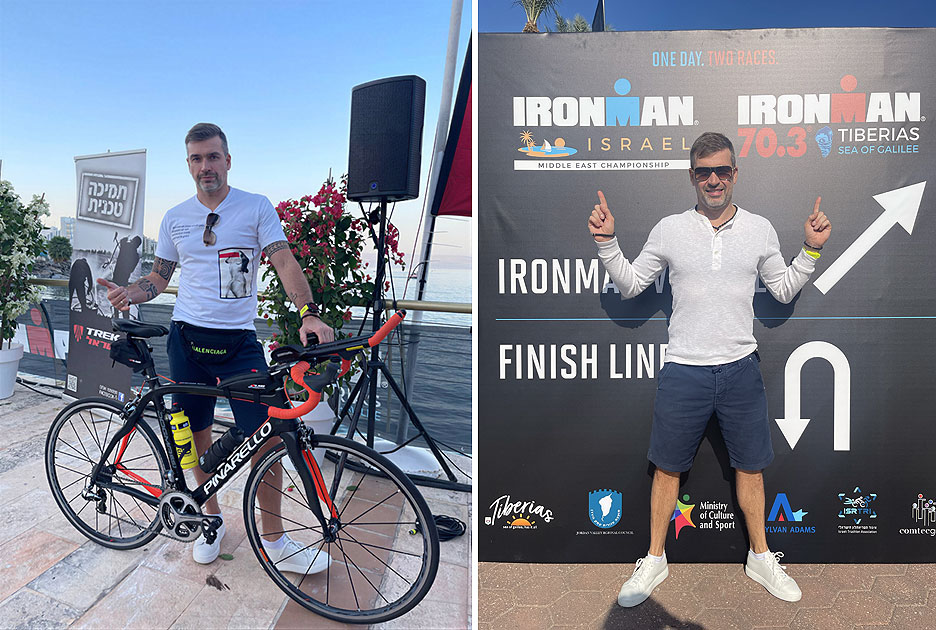
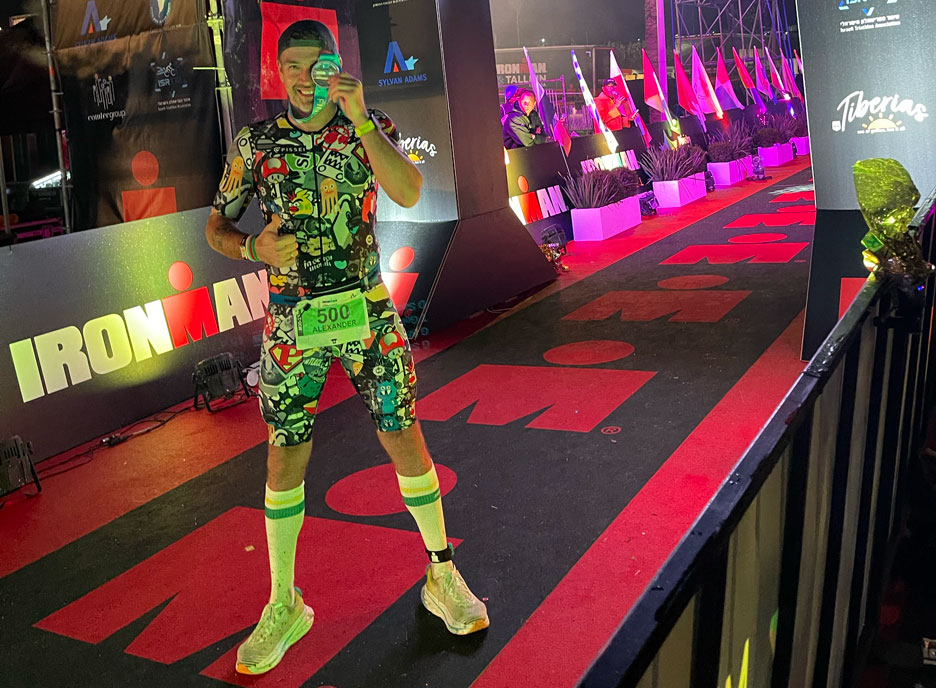
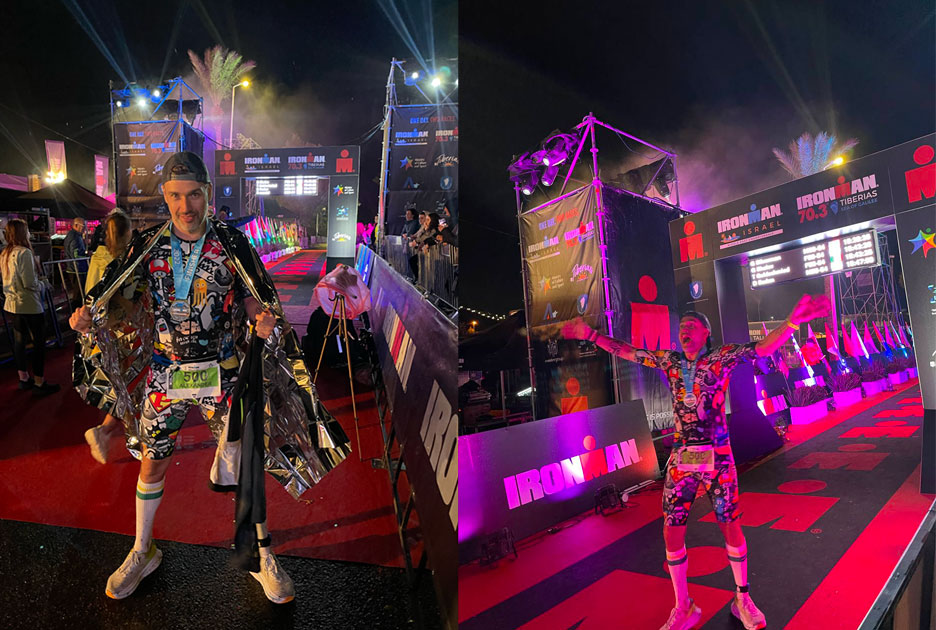
From 2022, I took part in a series of races, gradually increasing the distance: starting with short 5km and 10km runs, then a half-marathon (21km). Later came my first triathlon starts: in 1/8 and 1/4 Ironman distance formats. Having built up fitness and confidence, I tackled a half-Ironman (70.3) in St Petersburg. The culmination of my debut season was a full Ironman, which I completed in the Holy Land, Israel. I went through all these stages – from a 5km run to finishing an Ironman – in one year.

A full Ironman definitely isn’t about health, because over that distance the body operates at its absolute limit – it’s hard to talk about any physical benefit. You know how it is in mountaineering: approach 8,000 metres and everything above that starts to kill you. But the half-Ironman (70.3) is a more balanced format. Preparing for the half is easier to fit into life, and it’s actually beneficial for health – good cardiovascular load without extreme depletion. Plus, regular cyclic training rejuvenates the body and helps you look good after 40.
For beginners, I’d advise not rushing ahead, but achieving one result after another. Priority number one should be proper exercise technique – it prevents injury and boosts overall training efficiency. Also, it’s vital to monitor your endurance metrics: how your heart and body adapt to the new rhythm. In the early stages, these indicators matter much more than speed or distance covered.
Some train on their own, using pre-made online programmes. Others hire a personal coach. In my opinion, the most effective form of training is a triathlon club. It’s easier to maintain motivation and discipline in a group, plus there’s always support and shared experience. The Angry Boys story confirms this.
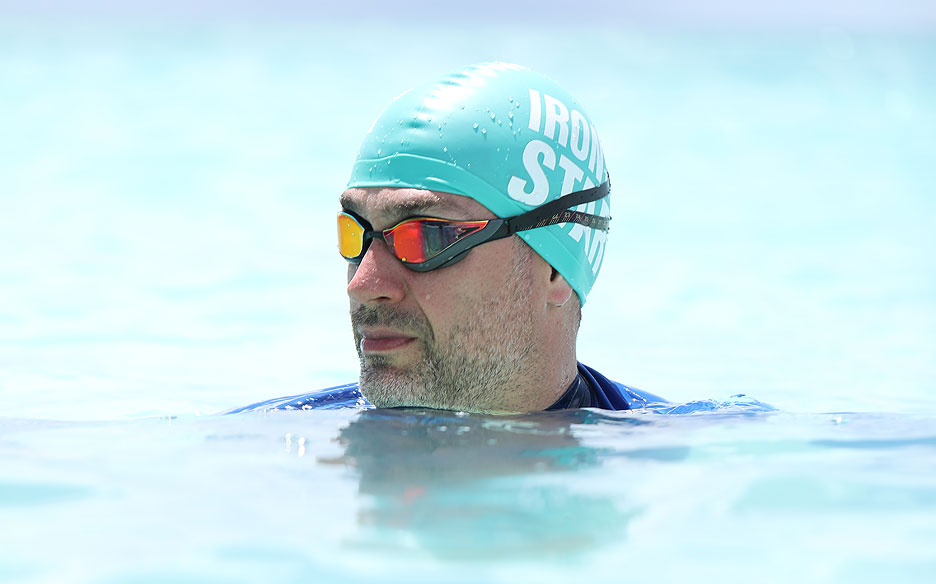
The first thing a triathlete should give up is hard liquor. Some stop drinking entirely, others switch to light red wine. This is purely physiological: intense training burns excess fat and reduces body weight, so the body simply can’t handle large amounts of alcohol. Your diet is structured to maintain high energy levels.
Triathlon teaches you to value sleep: you need at least seven hours a night, otherwise the body won’t recover between sessions. I try to stick to this rule, despite a demanding work schedule. I often choose morning for training, because finding time during my working day is difficult. Getting up at 5 am lets me comfortably complete a bike session or a run. But for that, quality sleep is essential to compensate for the early starts.
Overall, I’d say the most important thing in triathlon is a willingness to commit to the process regularly, because it’s not about how fast you get in or your starting abilities. Triathlon is a lifestyle choice: getting up early, constantly running, staying in shape, staying young. Triathlon also inspired Atomic Capital’s slogan: “Energy, determination, result.”
On Yachting
I joined the Skolkovo Sailing Team while studying for my Executive MBA at the Moscow School of Management SKOLKOVO. We competed in regattas for business school alumni from Europe and America, and even won three years in a row until borders effectively closed.
In 2015, Ekaterina Skudina, our coach, a silver medallist at the Olympic Games, founder of Pro Yachting and a truly remarkable person, called me and said: “Listen, you need to be here.” She was talking about an RC44 class regatta in Malta.
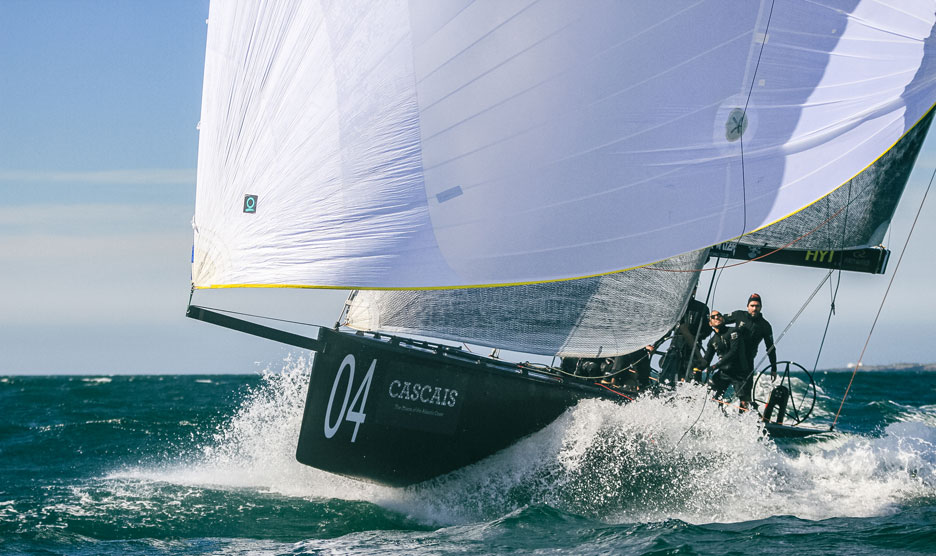
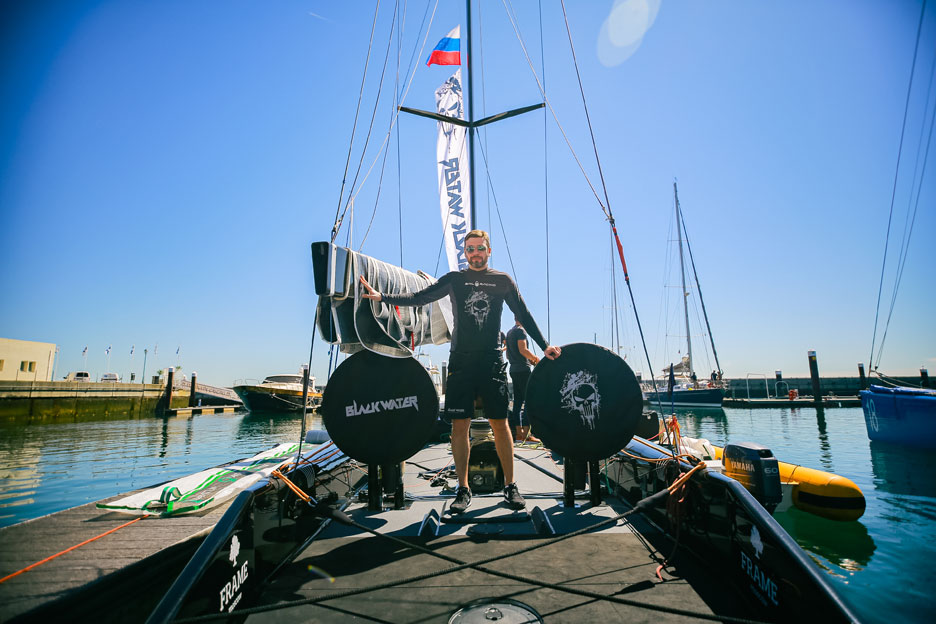
We flew out and came on board with my close friend Andreas Savvidis. (There’s an option to join the race if you have a VIP pass, the so-called ‘Ninth Man’). As soon as we got back ashore, I knew we needed one of those boats. A year later, we bought one from Kirill Podolsky (founder of the online service Anywayanyday). The boat was in a broken state, with no sails. We completely refitted it, bought a new set of sails. We designed a skull logo for our team, which we named Blackwater Sailing Team, with the tagline ‘Born in Skolkovo Sailing Club’. A supremely talented guy, Vitya Filippov, became manager of our dream team at just 23. The great Kostya Besputin agreed to be our tactician. Within six months of training, we competed at the Combined World Sailing Championships in Cascais, Portugal. During practice runs, we crashed into other boats multiple times, drawing genuine laughter from other teams, which included many America’s Cup sailors. And yet, on one of the finishes, we came second. I was at the helm. Torbjörn Törnqvist, owner of Artemis Racing, came over, shook my hand and said: “Alexander, I have no more questions.” That’s where our feeling of living the right life began.