

E-Lektra Marine to Establish Standards for Sailing Yachts' Transition to Electric Propulsion
The Beneteau and Fountaine Pajot groups have announced the creation of a joint venture with 50/50 ownership, tasked with implementing electric propulsion systems and intelligent energy management on sailing yachts.

In effect, seven companies—which currently account for 60% of global sailing yacht production—will unite under the E-Lektra Marine umbrella: Beneteau, Jeanneau, Lagoon Catamarans, Excess, Fountaine Pajot Sailing Catamarans, Fountaine Pajot Yachts, and Dufour. Each of these brands will retain its commercial independence, but together they will develop an open industry standard that other players in this market sector can also adopt.
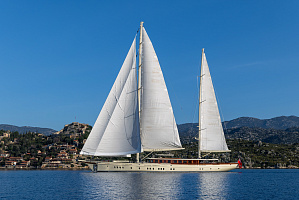
Modern sailing yachts are equipped with engines that are essential for manoeuvring in ports and during calm spells. However, while most of these are currently internal combustion engines, by 2030 E-Lektra Marine aims to convert 10% to 15% of all sailing yachts worldwide to electric propulsion.
To achieve this goal, the joint venture plans to develop standardised solutions covering electric, low-voltage hybrid, and high-voltage hybrid propulsion configurations for sailing vessels ranging from 9 to 24 m in length. Manufacturers will be offered comprehensive, scalable options for optimising onboard energy consumption, covering engine operation, solar panels, generators, life support systems, and shore power.
The joint venture will bring in three partners—specialised technology companies from France—for this development. Alternatives Energies will contribute its system integration expertise gained from real-world marine installations; Cirtem will handle power conversion and energy management; and EVE System will design battery packs so that alliance members no longer need to purchase batteries developed for other industries.
E-Lektra Marine considers the consolidation of production volumes as its market advantage: common technical standards across the seven brands will enable sufficiently large procurement orders to approach leading suppliers of marine electrical components on industrial terms, thereby reducing unit costs. The alliance will have a vertically integrated supply chain jointly owned and managed by the two parent groups.
The open-standard model is designed for the long term. By inviting other players in the marine industry to adopt its platform, E-Lektra Marine hopes to turn its developments into the default industry standard. If other manufacturers begin to adopt the same battery architecture and energy management protocols, overall production volumes will increase further, costs will fall, and the service network maintaining these systems can be trained once and deployed worldwide.
The ultimate goal is to make low-emission sailing yachting more accessible without compromising safety, ease of use, or navigational freedom at a price competitive with diesel engines. It is precisely the reduction in the cost of transitioning to electric propulsion that the production volumes of the seven founding brands will help achieve.
Modern sailing yachts are equipped with engines that are essential for manoeuvring in ports and during calm spells. However, while most of these are currently internal combustion engines, by 2030 E-Lektra Marine aims to convert 10% to 15% of all sailing yachts worldwide to electric propulsion.
To achieve this goal, the joint venture plans to develop standardised solutions covering electric, low-voltage hybrid, and high-voltage hybrid propulsion configurations for sailing vessels ranging from 9 to 24 m in length. Manufacturers will be offered comprehensive, scalable options for optimising onboard energy consumption, covering engine operation, solar panels, generators, life support systems, and shore power.
The joint venture will bring in three partners—specialised technology companies from France—for this development. Alternatives Energies will contribute its system integration expertise gained from real-world marine installations; Cirtem will handle power conversion and energy management; and EVE System will design battery packs so that alliance members no longer need to purchase batteries developed for other industries.
E-Lektra Marine considers the consolidation of production volumes as its market advantage: common technical standards across the seven brands will enable sufficiently large procurement orders to approach leading suppliers of marine electrical components on industrial terms, thereby reducing unit costs. The alliance will have a vertically integrated supply chain jointly owned and managed by the two parent groups.
The open-standard model is designed for the long term. By inviting other players in the marine industry to adopt its platform, E-Lektra Marine hopes to turn its developments into the default industry standard. If other manufacturers begin to adopt the same battery architecture and energy management protocols, overall production volumes will increase further, costs will fall, and the service network maintaining these systems can be trained once and deployed worldwide.
The ultimate goal is to make low-emission sailing yachting more accessible without compromising safety, ease of use, or navigational freedom at a price competitive with diesel engines. It is precisely the reduction in the cost of transitioning to electric propulsion that the production volumes of the seven founding brands will help achieve.
News
E-Lektra Marine to Establish Standards for Sailing Yachts' Transition to Electric Propulsion
The Beneteau and Fountaine Pajot groups have announced the creation of a joint venture with 50/50 ownership, tasked with implementing electric...

News
A new 95 m superyacht concept from Palladino Yacht Design
The vessel's striking geometric architecture challenges traditional yacht design.

News
Project WOW: welness on water
Swiss Ship, Pascoli International, and Carla Guilhem Design Unveil WOW — Wellness on Water — A 96-Meter Yacht Redefining Longevity and Wellbeing...
Motor boats
Martial art
The cabin cruiser from the newly established Tykun X brand descends from navy boats and is highly customisable.