

The pioneering explorer
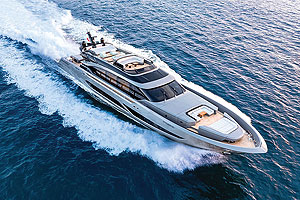
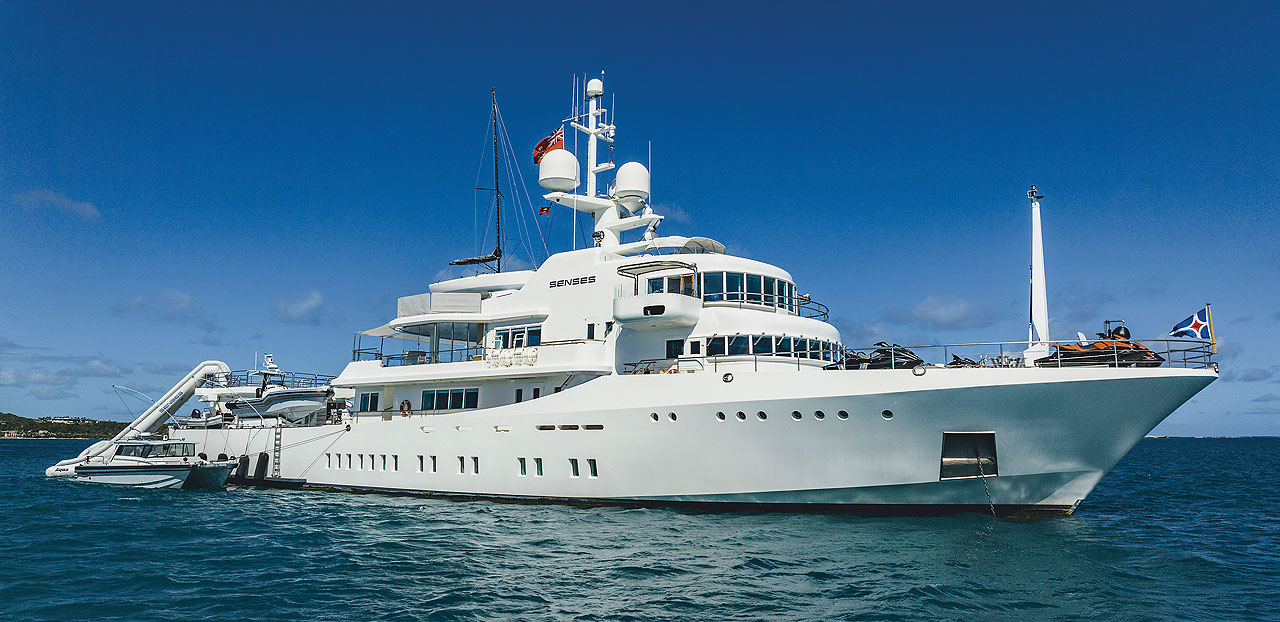
One of the world's first expedition yachts, the Philippe Starck-designed 29 m Senses is back in action. Last May, her owner took a World Superyacht Awards legacy award.


During the height of the coronavirus pandemic, Larry Page, one of Google’s co-founders, opted for a self-isolation plan that only the world's elite could afford. Like a modern-day Noah, he set sail for Polynesia aboard a yacht with his family. At the time, the southern Pacific Ocean had become an impromptu anchorage for nearly a hundred super- and megayachts. Their owners were drawn by Fiji’s policies, which, in response to the collapse of mass tourism, shifted focus to the luxury segment, opening territorial waters to yachts on the condition that all passengers remain onboard and undergo COVID-19 testing.
Page seized this opportunity, turning his isolation into a luxurious retreat that was worlds away from confinement within four walls. His sanctuary was the 59-meter Senses, a yacht we’ll explore further. To his credit, the tech magnate didn’t forget about the needs of ordinary people during the pandemic, using his private jet to deliver medical masks and other protective equipment to Fiji.
For months, this yacht served as his home in one of the most remote corners of the planet, perfectly equipped for extended autonomous voyages—whether through icy waters or under the equatorial sun. Last year, Senses underwent a refit and is now ready to sail the oceans once again, offering unforgettable experiences.

Senses is a true rarity, one of the oldest expedition yachts in the world, and its history is all the more fascinating because of it. Built in 1999 by Jack Setton, an American businessman of French descent, the yacht has always stood out. In early May, Setton was awarded the prestigious World Superyachts Award for his contributions to the industry. This accolade recognized not just the generosity of a client but the vision of a man who propelled yacht-building forward. His investments—and more importantly, his bold ideas—acted as catalysts for new technologies, engineering solutions, and creative breakthroughs. Even in the 1990s, Setton foresaw the potential of expedition yachts, conversions of older vessels, and shadow boats, and over his lifetime, he commissioned more than 60 yachts.
Together with Klaus Kusch, the founder of the German shipyard Kusch Yachts, Setton envisioned transforming the ice-class tug Simson (now Sea Ranger), nearly 78 meters long, into a yacht designed for long cruising adventures. Its spacious aft deck was intended to carry smaller boats, such as the 13-meter Nelson 42, which Setton enjoyed using for coastal trips. However, he was dissatisfied with the difficulty of launching and retrieving the tender in rough seas. This challenge inspired him to create a fundamentally new vessel, perfectly suited for active leisure and expeditions, with space for tenders, sailboats, and other expedition equipment. Thus began work on the Senses project, which was groundbreaking for its time. Setton compared it to the Hummer of the seas.

He immersed himself in the design process, spending countless hours at the Martin Francis design office in the Sophia Antipolis technology park near Antibes, mentally refining every detail to achieve perfection in both layout and the yacht’s exterior.
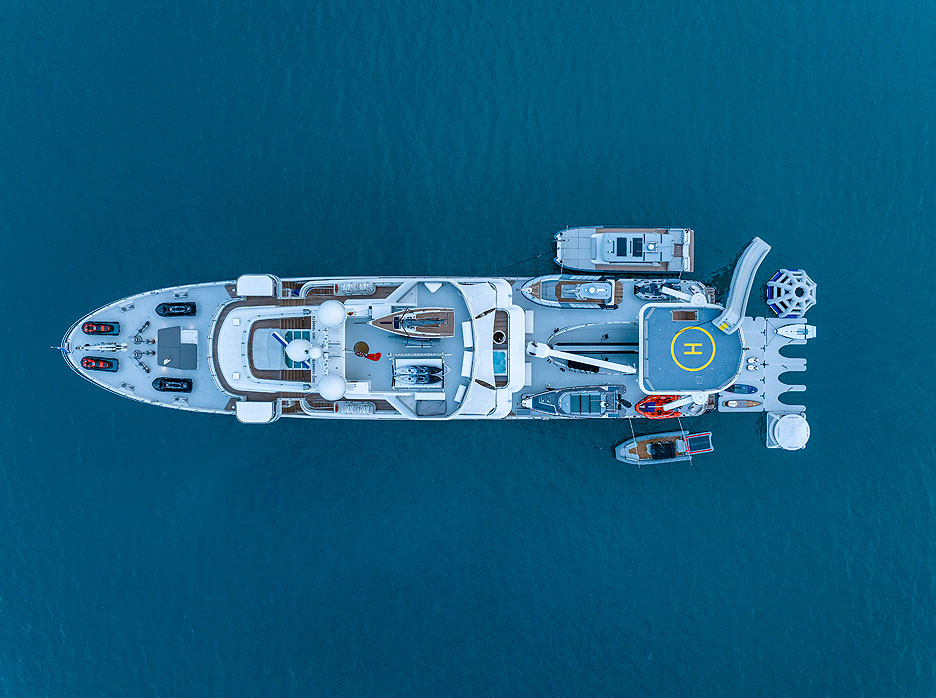
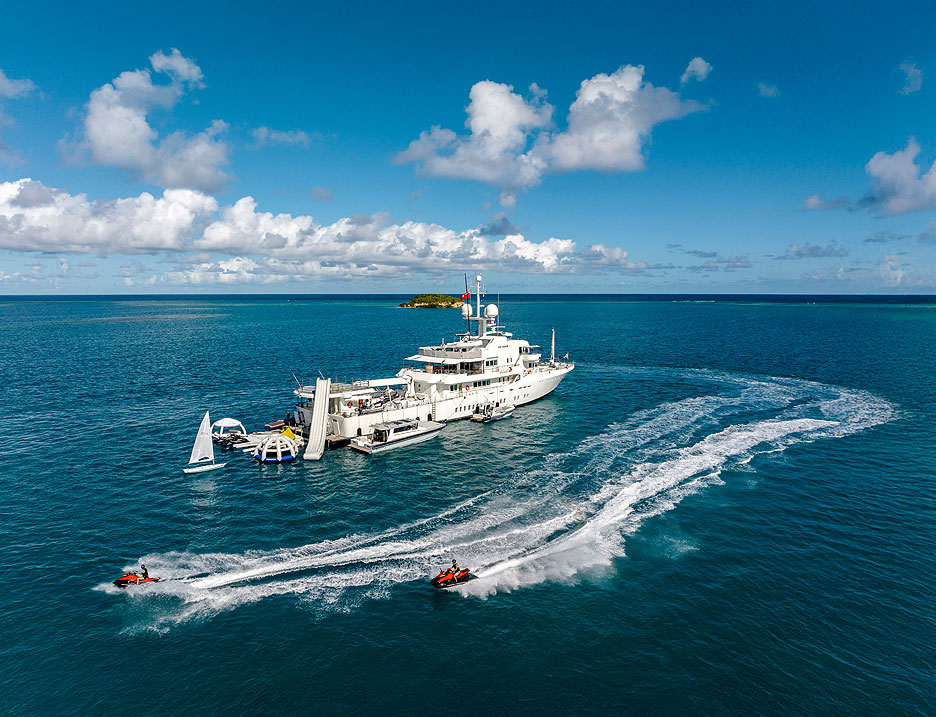
The ice-class hull transformed Senses into a rare gem—a yacht ready for charter in the harsh 75th latitudes, whether north or south. But its capabilities didn’t end with polar waters. The yacht was designed to carry an arsenal of equipment: diving gear, a vintage Nelson 42, an elegant 8.5-meter sailboat by Nat Herreshoff, a nimble Hobie catamaran, an 8-meter sport boat for fishing enthusiasts, a swift 7.5-meter RIB, and jet skis for adrenaline seekers. It also needed space for a helicopter landing pad.
Engineers at the Fr. Schweers shipyard, which built Senses, found an optimal solution to the original challenge—how to elegantly launch and retrieve the Nelson tender in rough seas. They borrowed a system from North Sea lifeboats and patented it. Now, passengers could board the tender directly on deck and lower it into the water seamlessly. (Today, the main tender aboard Senses is even larger than the Nelson 42—a formidable 14-meter catamaran named Catalyst.)

Thanks to the exterior designers at Francis Studio, Senses achieved a harmonious blend of reliability and elegance, making it the ideal expedition superyacht. Its steel hull and superstructure, made of steel and aluminum, create a profile that is both rugged and refined.
For the interiors, none other than Philippe Starck was brought on board. His signature style transformed the yacht, infusing it with a unique atmosphere. The spacious main salon, with white walls and a glossy ceiling, is bathed in sunlight streaming through floor-to-ceiling windows. Bright accents, inserts of reddish-brown wood with a carefully selected herringbone texture, and tactile materials enhance the space.
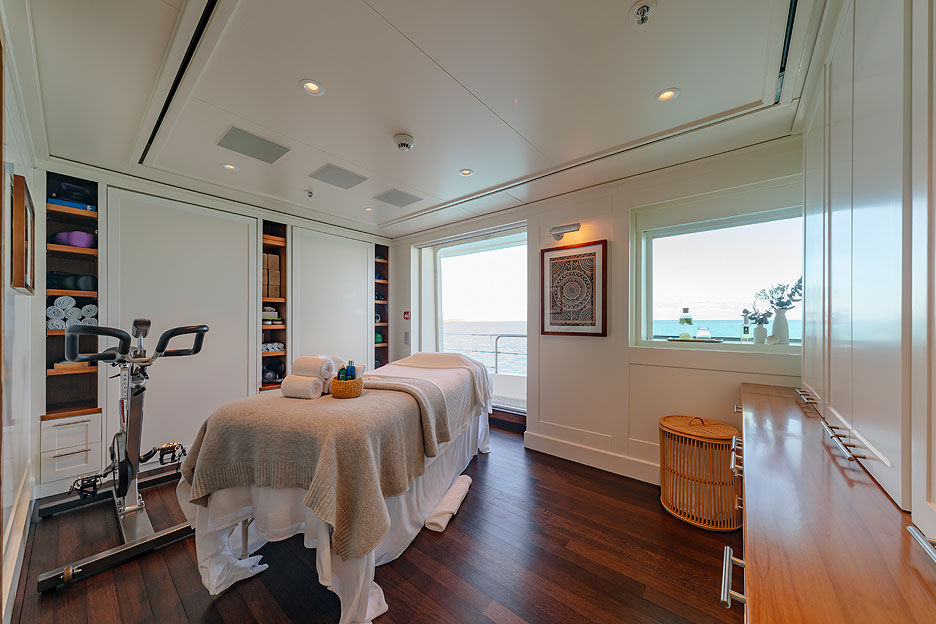
The lower deck houses the master suite and four guest cabins, each with its own en-suite bathroom. The owner’s suite spans the full beam of the midship and features a gyrostabilized bed, two seating areas, a walk-in wardrobe, and a luxurious bathroom. If needed, an additional double cabin can be arranged on the main deck by converting the gym, which is combined with a massage room and includes its own bathroom. The yacht also accommodates a professional crew of up to 16.

Since the open deck space on the main deck is occupied by tenders, the al fresco dining area is located one level up. The upper deck also features a jacuzzi. From the semi-circular glass observation lounge, guests can enjoy breathtaking views of the endless ocean, while the lounge area offers space for movie nights, card games, or relaxed conversations. The upper deck is the ultimate spot for both relaxation and parties.
The entertainment arsenal aboard today’s Senses is impressive: a sailboat, four jet skis, twelve kiteboards, a trampoline, and fishing gear ensure there’s never a dull moment. From the helipad, guests can slide into the sea via a water slide. In addition to the catamaran, the yacht carries five tenders, ranging from the speedy Axopar chase boat to a compact Zodiac RIB.
As for technical specifications, this expedition yacht is powered by two robust Deutz engines, enabling a top speed of 15 knots. Its cruising speed is 12 knots, with a range of up to 7,400 nautical miles.

Even before its refit, Senses was a remarkable yacht, and Page had every reason to buy it rather than commissioning a new build. Yet, even this extraordinary vessel lost its allure after the quarantine. Larry Page eventually sold Senses. Unlike Sergey Brin, who parted ways with his 73-meter Dragonfly only to immediately acquire a new, even more impressive “dragonfly” from Lürssen for $450 million, Page chose not to chase size. After Senses, he opted for a more modest yacht and once again set sail for his beloved Polynesia.
Following its sale, Senses was updated and refurbished and is now cruising the Caribbean.

News
Top 10 sailing yachts at Palma International Boat Show 2026
The annual Palma International Boat Show 2026 has opened in Palma de Mallorca. It runs from April 29 to May 2. Here are ten of the largest...
Спорт
The Iron Argument
How do yachting and triathlon interact? Can you stay fit and train for Ironman competitions on board? Here's what well-known triathletes in the...

News
Miami Yacht Show: meet the new Chris-Craft Launch 27
Chris-Craft introduces a redesigned version of one of its most signature models with a sleek new hull, interior design and technology at the...

News
Netto II: second Amels 80 hits the water
The new 80-meter yacht with a beautiful light blue hull was unveiled to the public for the first time in Vlissingen.