

Steamship pioneer


Today, a monument to this man adorns the embankment of Nizhny Novgorod. The inscription on the pedestal reads: "Dmitry Vasilyevich Sirotkin. Mayor of Nizhny Novgorod (1913–1917). Shipbuilder who made a significant contribution to the development of Volga navigation."
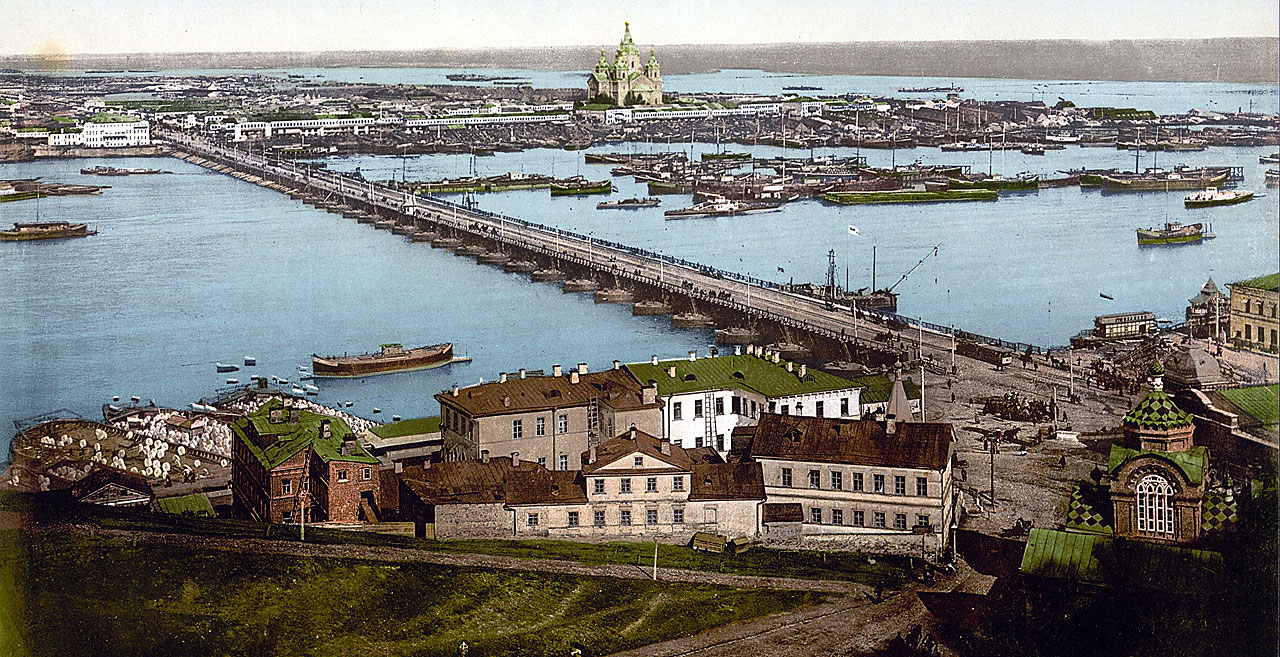
Dmitry Vasilyevich was born near the banks of the Volga River, in the village of Ostapovo, Balakhna County, Nizhny Novgorod Province. Today, it is part of the village of Purekh in the Chkalovsky District of Nizhny Novgorod Region.
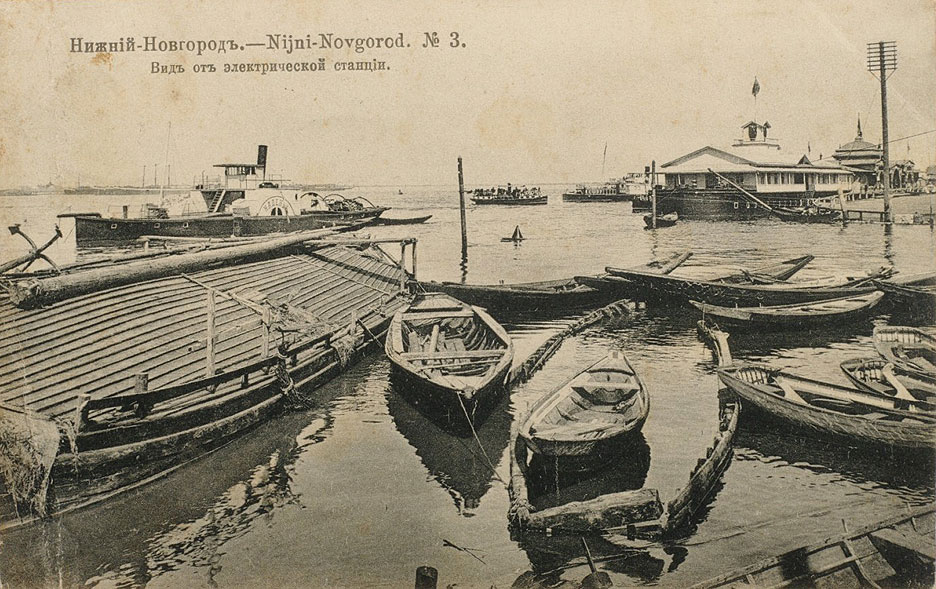
The Sirotkin family lived in a region where the river, not the land, sustained the people. The father of the future entrepreneur, Vasily Ivanovich Sirotkin, owned a handmade wooden "rashiva"—a flat-bottomed sailing boat. In the 1860s, the most enterprising owners of rashivas began acquiring steamships. Vasily Sirotkin became a steamship owner as well.
Dmitry’s career began on his father’s steamship called "Volya" (Freedom). During his trips with his father, young Mitya performed various tasks. Initially, he worked as a cook’s assistant. As he grew stronger, he was entrusted with a stoker’s shovel. By the age of 25, Dmitry was already commanding "Volya."
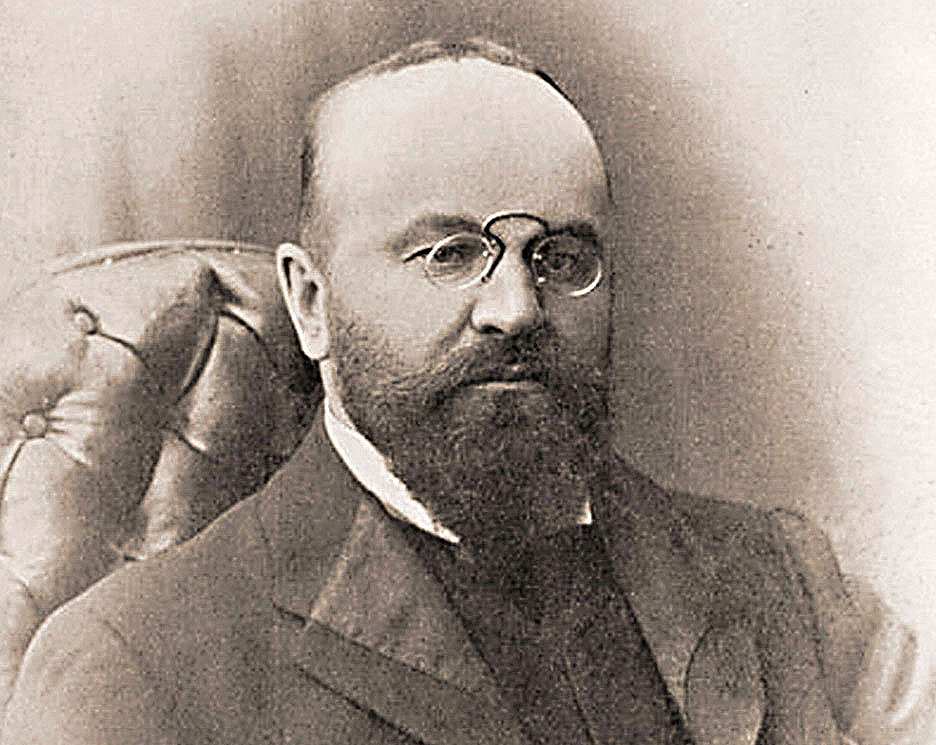
Dmitry’s true rise to prominence was aided by his father-in-law, Kazan steamship owner Kuzma Chetvergov. He lent Dmitry money and also provided him with an old steamship, "Zarya" (Dawn), for lease. Dmitry also owned his own steamship, "Zabiyaka" (Troublemaker). In 1895, he added a tugboat, "Volya," with an iron hull and a powerful engine designed by the renowned Volga engineer V.I. Kalashnikov.
In addition to steamships, Dmitry owned barges, which he used primarily for transporting petroleum products. At the time, there were essentially two types: kerosene and mazut (fuel oil). Most of Russia's oil was extracted in Baku, where kerosene was distilled from it, while the residue—mazut—was initially discarded but later used as fuel and as a raw material for producing lubricants. Mazut gained widespread use as fuel only in the late 1880s and early 1890s. Dmitry seized this opportunity and carved out a niche in the river oil transportation market.
In 1898, Dmitry significantly expanded his enterprise by acquiring the oil transport business of Moscow merchant S.M. Shibayev, which included four tugboats and fifteen wooden barges.
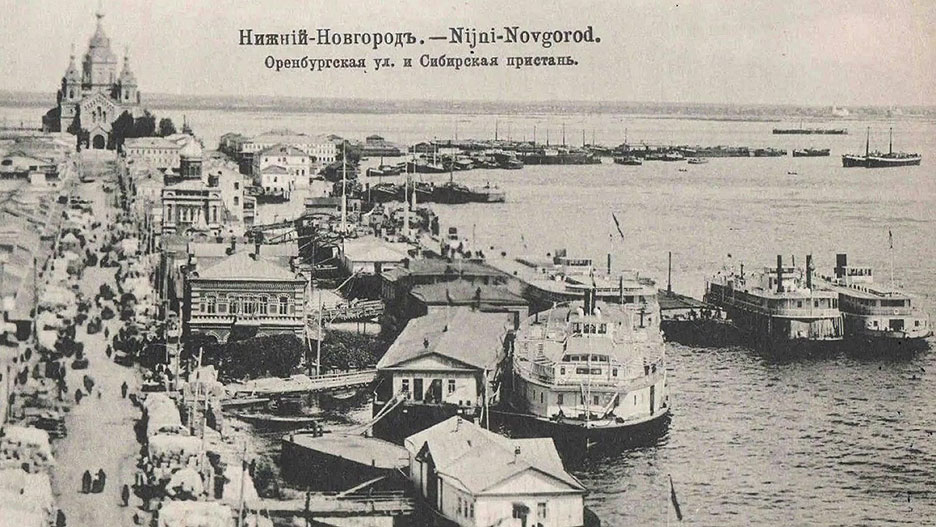
Dmitry obtained a favorable three-year loan to purchase Shibayev’s fleet from the famous Moscow businessmen, the Ryabushinsky brothers. Like Sirotkin, they were Old Believers, and it was well-known that Old Believer merchants readily helped their fellow believers.
On April 26, 1907, Sirotkin’s company was transformed into a joint-stock partnership. It operated fifteen steamships and owned 65 oil tank barges, both iron and wooden. In 1910, Dmitry further expanded his business by becoming a co-founder of the Volga Steamship Company. Its fleet included 10 schooners on the Caspian Sea, 33 steamships, 42 iron barges, and 113 wooden barges.
It’s worth noting that, as one of the wealthiest and most influential individuals in the Volga region, Sirotkin respected his employees. He addressed many of them formally and treated them with great respect. However, he was not only known for his politeness—Dmitry Vasilyevich was the first on the Volga to organize accident insurance for sailors. Additionally, his workers received higher wages compared to other ships.

Wage increases were achieved by reducing the number of workers. By mutual agreement with the owner, the remaining workers performed additional duties for extra pay. There were instances where large oil tank barges were operated by four sailors instead of the usual eight. Those who couldn’t cope were dismissed or fined.
While enforcing strict discipline and penalties, Sirotkin did not micromanage his employees, allowing them to show initiative. He had a talent for selecting workers, promoting them, and collaborating effectively. This was the key to Dmitry Vasilyevich’s consistent success.
Sirotkin boldly embarked on new ventures, implementing seemingly fantastic projects. One such project was the establishment of steamship navigation (for the first time in history!) on the Aral Sea.

In December 1907, Dmitry Vasilyevich Sirotkin and his fellow Old Believer, steamship owner M.P. Lapshin, sent an expedition to Chardzhou to explore navigation on the Aral Sea and the Amu Darya River. The journey was successful, and in 1908, Sirotkin and Lapshin dispatched a steamship and timber for constructing wooden barges and boats from Nizhny Novgorod to the Aral Sea in disassembled form. This led to the establishment (officially in 1909) of the Khiva Steamship and Trade Company, with Dmitry Vasilyevich Sirotkin as its chairman. Khiva cleared passages in the Amu Darya estuary, removed reed thickets, and opened navigation from the "Aral Sea" station of the Tashkent Railway through the Aral Sea to the Amu Darya estuary and along the Amu Darya to Chardzhou. As a result, the Khiva Khanate gained regular transport links with the rest of the Empire for the first time.
Sirotkin was an innovator in the technical sphere as well. By the late 1890s, he astonished the entire Volga region by constructing several wooden barges of a new design. Sirotkin discovered that the most efficient type of Volga vessel, perfectly adapted to the river’s conditions, were rashivas (flat-bottomed ships that easily navigated shallows and sandbars). The detailed forms of these vessels had been lost over time by Volga shipbuilders. After extensive efforts to restore these forms and supplement them with advancements in shipbuilding science and practice, Sirotkin designed a new type of barge, unmatched in navigational qualities.
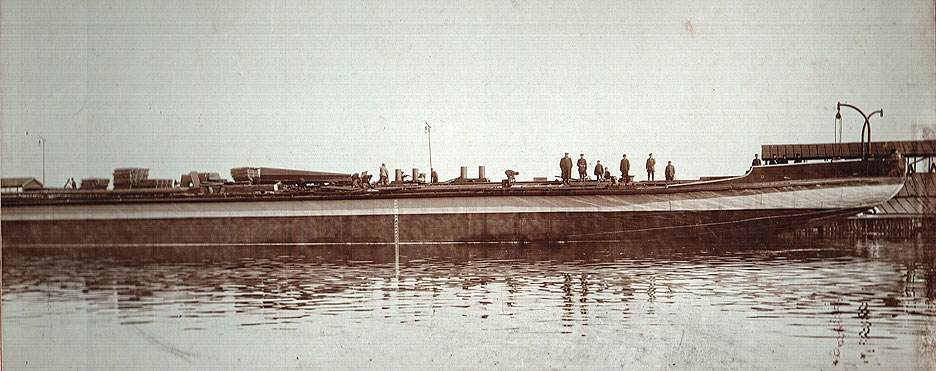
The first wooden "novelty" barges created by Sirotkin amazed contemporaries with their unprecedented size. However, they were dwarfed by the grand iron "Marfa-Posadnitsa," built in 1907, which revolutionized barge shipbuilding.
"Marfa-Posadnitsa" was constructed at the Shorin plant in Gorokhovets based on Sirotkin’s design. The technical implementation of his idea was entrusted to the brilliant Russian engineer Vladimir Grigorievich Shukhov. This wonder barge immediately attracted the attention of the oil trust giant—the Nobel Brothers Partnership. Upon learning about "Marfa-Posadnitsa," Nobel engineers, with Sirotkin’s permission, thoroughly examined the vessel and conducted several voyages aboard it. The results were outstanding, prompting the Nobel Brothers to order an entire fleet of tank barges of the "Marfa-Posadnitsa" type from the Kulebaki plant.
Barges of the "Marfa-Posadnitsa" type were not the only example of Dmitry Vasilyevich’s introduction of technical innovations at his enterprises. In 1911, he began implementing another grand project—the replacement of steamships with motor ships powered by diesel engines. Compact diesel engines occupied less space than steam engines. Additionally, diesel engines significantly reduced fuel consumption, achieving savings of 60–100%.

Sirotkin presented his convincing calculations to his partners, and the shareholders of "Volga," after discussing the director’s proposal, decided to completely replace steamships with motor ships over the next few years. To achieve this, they decided to build their own shipyard.
The shipyard was established near the village of Bor, opposite Nizhny Novgorod, in 1911 and was named "Nizhny Novgorod Motor Ship." The first motor ship built by Sirotkin (a passenger barge named "Kashevar") was launched in 1912. That same year, the tugboat "Tsaritsyn" and the oil tank barge "Protopop Avvakum" were constructed.
Sirotkin’s fruitful and diverse activities in Nizhny Novgorod came to an end in 1917. After the October Revolution, Sirotkin stayed in the "White" South, and from 1920, he settled in Yugoslavia, in Belgrade, where he lived until his death in 1953. On the Danube, Dmitry Vasilyevich operated a small steamship business.
In conclusion, here is an interesting fact: when Soviet troops liberated Belgrade in 1944 and crossed the Danube, the former Nizhny Novgorod merchant provided all his vessels for their use.