

Bugatti Tourbillon: the emotional contact

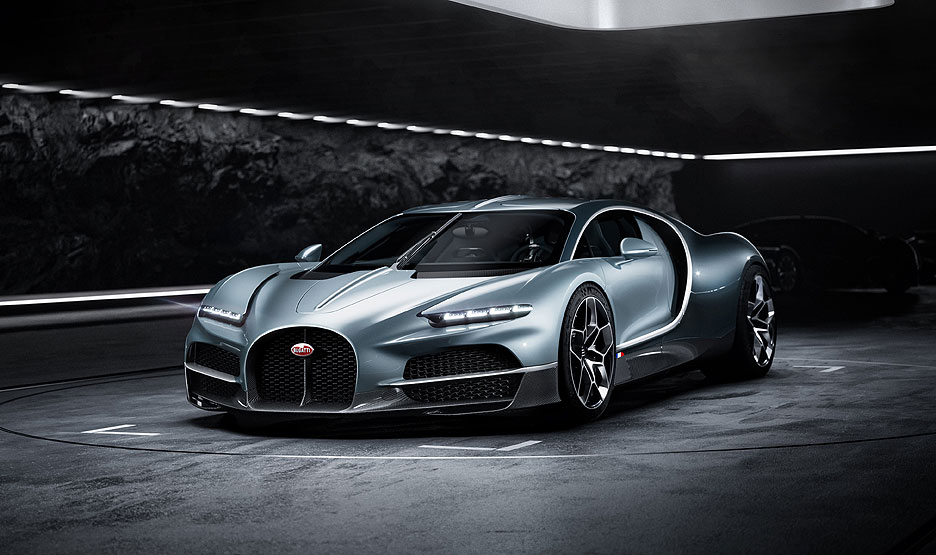
Since the foundation of Bugatti in 1909, their cars have been the epitome of engineering genius and aesthetic sophistication. Legendary models such as the Type 35 earned numerous victories in motorsport, and the Type 57 became a symbol of luxury and automotive beauty.
After the World War II the company fell into decline and went bankrupt, but in 1998 the brand was acquired by Volkswagen Group with the aim of creating a hypercar with over 1000 hp under the hood, capable of accelerating up to 400 km/h. In 2005, the Veyron came out to mark a true breakthrough in the industry, which is only worth the 8-litre W16 engine with four turbochargers alone! The Veyron instantly revitalised Bugatti's reputation, becoming the epitome of new technology. In 2016, the Veyron's successor, the Bugatti Chiron, was unveiled. The power increased to 1500 hp, the top speed exceeded the cherished ‘four hundred’, but there was nothing fundamentally new in it — the same internal combustion, the same 16 cylinders in the shape of the letter W. A few years later, it became clear that something more radical would be needed for the next model.
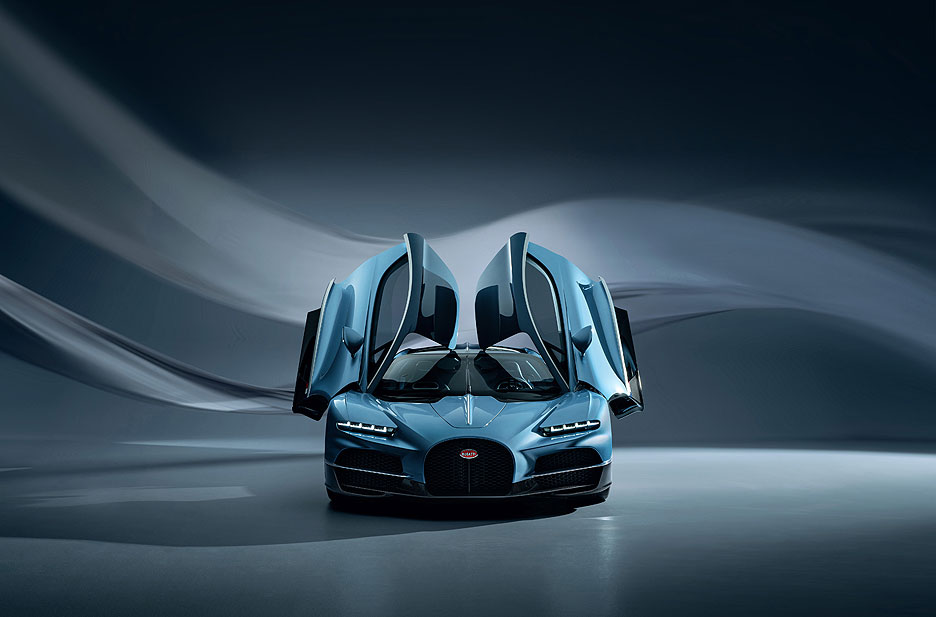
And then an important event happened: in 2021, Volkswagen sold Bugatti to Rimac Automobili, a Croatian start-up specialising in the development of electric hypercars. The company already had its own car — the Rimac Nevera, an all-electric monster with four motors with a combined output just under 2,000bhp. It would seem enough to equip it with an elegant shell with the trademark horseshoe-shaped grille and Bugatti emblems to release a new hit. However, Mate Rimac himself insisted that full electrification was not the best way forward for Bugatti. It was very important to retain the emotional component that the internal combustion engine provides. ‘Progress, yes, but not at the expense of emotion,’ he explained his position. This was the key principle behind the creation of the Bugatti Tourbillon.
Rimac proposed five concepts for a possible replacement for the Chiron. Among them were an electric SUV and a four-seat model, but the most enthusiastic was a version of a hybrid 16-cylinder hypercar with five motors and a huge battery. In the end, Bugatti's technical director Emilio Scervo persuaded to reduce the number of electric motors to three, and the production of the novelty was given the green light.

The petrol engine for the car was developed from scratch — only the number of cylinders remained the same. It is now an 8.3-litre supercharged V-twin engine, a work of art in its own right. Its crankshaft, almost a metre long, spins to 9,500 rpm. The eight-speed dual-clutch gearbox is now located behind the engine, rather than in the tunnel between the seats as before.
This has made the cabin narrower, although there is more space for driver and passengers. And the tunnel now houses a 21 kWh running battery, which gives a range of about 30 km on pure electric power — a nice saving on petrol for the owner of a $4.6 million car.
The total powertrain output of 1,775 hp is achieved in combination with three electric motors — two on the front axle and one on the rear axle. Rimac's own electric motors are also engineering masterpieces. Each of them, weighing just 21kg, develops 400bhp.
The A-arms of the suspension for the Tourbillon are made by layer-by-layer synthesis, essentially 3D printing from metal, and they look like the bones of an unknown animal or a product of alien technology. An active rear spoiler aids braking by popping up at a 55-degree angle to maximise downforce and road contact.
The design team, led by recently retired head Achim Anscheidt (responsible for the Veyron and Chiron), has endeavoured to pay homage to the Tourbillon's predecessors and the company's history.
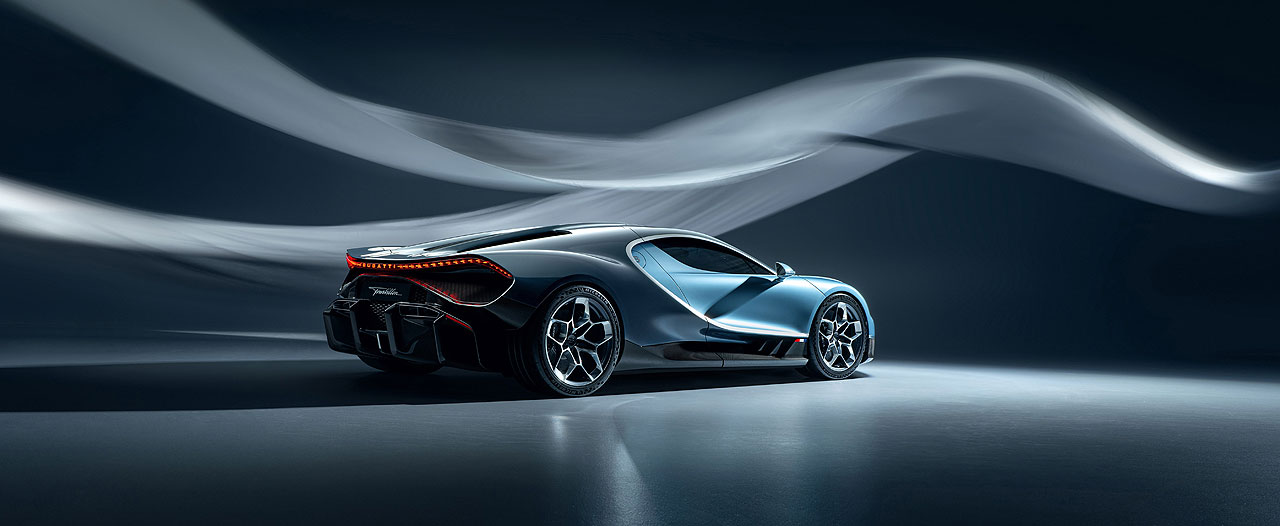
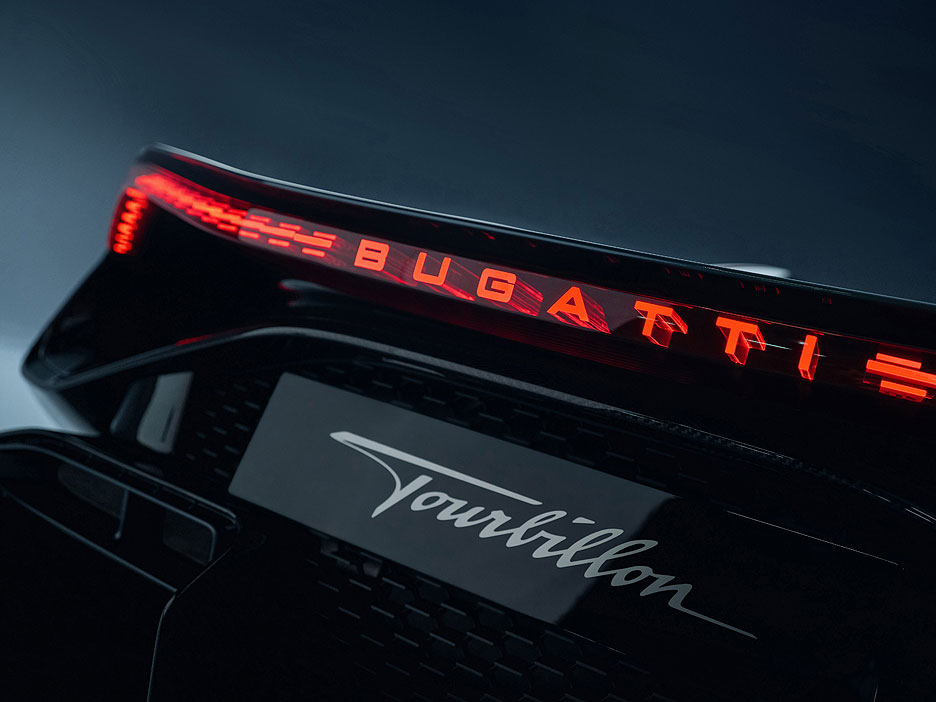
The exterior of the new car follows the brand's tradition by incorporating distinctive design elements. The horseshoe-shaped grille, the curved dashes along the sides and the two-tone body paint scheme underline the continuity with the legendary Veyron and Chiron. However, the designers have gone further in referencing Bugatti's earlier history. The wide rear wings, the low bonnet with Art Deco elements and the distinctive ridge in the centre recall the classic Type 57SC coupe produced almost a century ago.
Like the Tourbillon in relation to the Chiron, the Type 57SC was lower, faster and lighter than its predecessor thanks to the use of magnesium alloy in the bodywork. Due to its high flammability, it was impossible to weld this metal, so the Type 57SC body had to be riveted together, creating a distinctive line running the length of the car. This design element would become a trademark of the Tourbillon — it now houses the brake light LED strip.
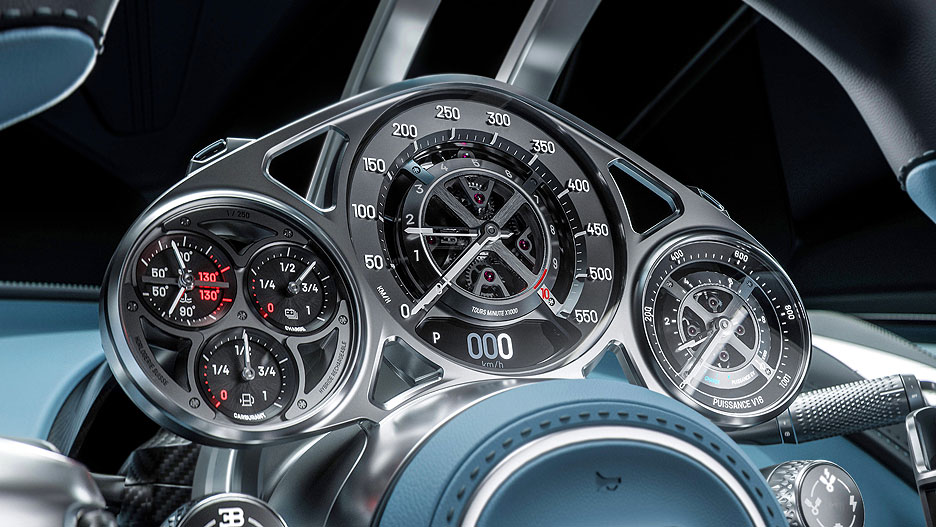
But the real revolution, according to the creators, was in the interior. Mate Rimac believes that nothing makes a car obsolete faster than the displays and multimedia interfaces, which at the time of its launch represented the last word in technology. Frank Heil, Bugatti Rimac's design director, fully shares this philosophy. ‘We are trapped in modern technology, — he says. — But how do you make a car remain relevant in a contest of elegance in 2075? So that it doesn't look ridiculous when holographic displays or augmented reality contact lenses are in full use all around? The answer is to create a completely analogue interior.’
The result is a cabin where the combination of analogue mechanics and pure art more than justifies each of the nearly five million dollars. The steering wheel is mounted on a fixed hub — so as never to overlap the dashboard from the Swiss watchmaking house. There is not a single electronic display on them, all hands are mechanical, and the most complex gear drives are proudly painted under sapphire glass.
The skeletal centre console is made of the same glass. Only Bugatti knows how hard it is to carve such a large and complex shape actually from a piece of crystal, but Mate Rimac was adamant — there is no place for plastic in the Tourbillon interior!
For those who cannot do without the usual pixels, there is still one small screen, but it can be hidden, leaving only the crystal, metal and leather trim in view. Needless to say, every detail of the interior can be customised. Bugatti even offers to trim the car to match your favourite watch — or yacht.