

Leader of the pack

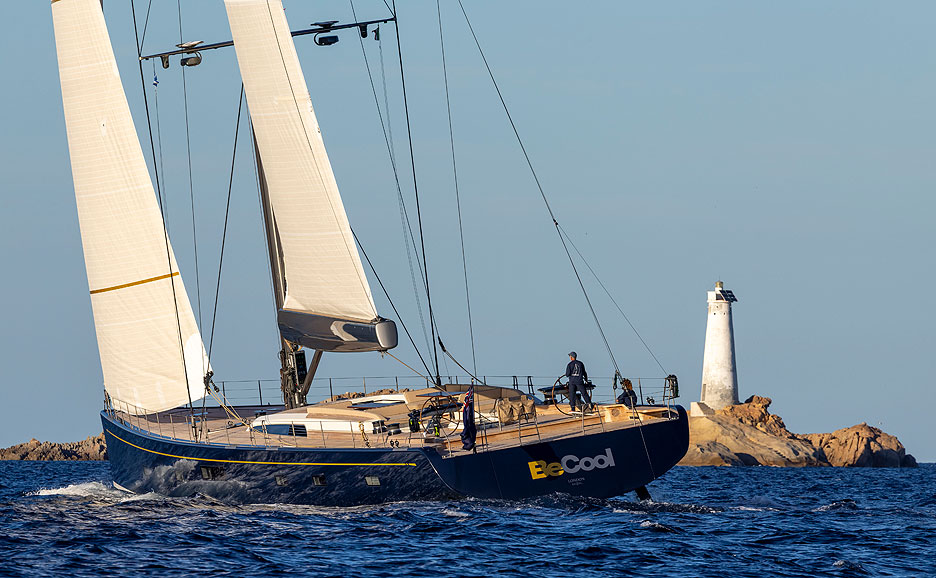
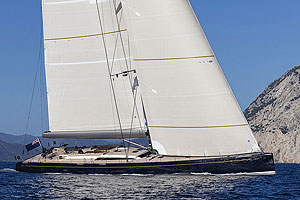
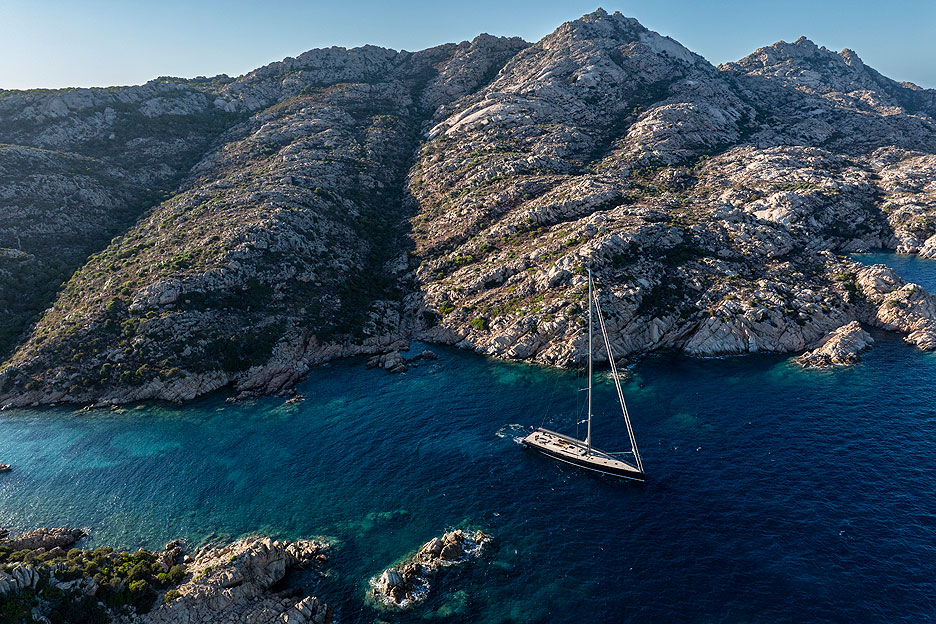
The maxi yacht Swan 128 Be Cool is now the flagship of Nautor Swan (the Swan 131 Aristarchos, launched in 2006, does not count as it was a custom build, whereas the 128 model will go into series production). Its world premiere was triumphantly held at the Monaco Yacht Show last September. However, the shipyard presented the yacht even earlier to its most loyal friends and clients at an exclusive event in the renovated Porto Carlo Riva, located in the resort town of Rapallo on the Ligurian coast. The interest in this latest and largest development from the Finnish shipyard was immense, joining the lineup of large Nautor yachts that already includes the fast Swan 80, the first hybrid Swan 88, the performance cruiser Swan 98, the comfortable cruiser Swan 108, the luxurious Swan 120, and the race-oriented former flagship ClubSwan 125 (Skorpios).
“The Swan 128 perfectly embodies the Swan concept of a sport cruiser — a yacht designed for long ocean passages, yet equally suited for major international competitions without requiring any modifications,” explains Germán Frers, the designer behind this and all previous Nautor Swan projects. The collaboration between the shipyard and the renowned naval architect has lasted more than 45 years, and for Frers Naval Architecture & Engineering, the Swan 128 marks milestone project number 1400.
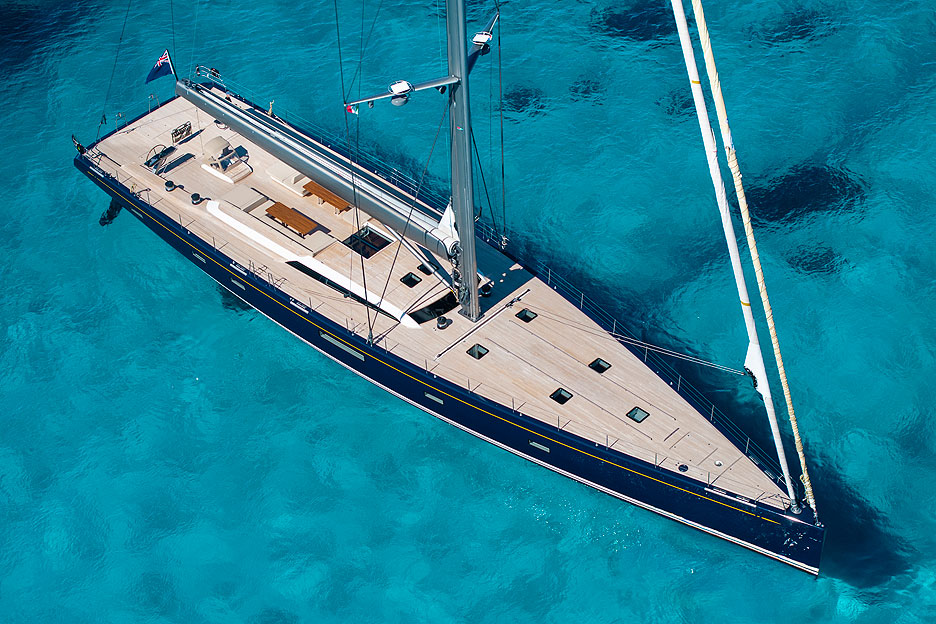
The deck and superstructure of the maxi yacht were designed by Micheletti + Partners, taking inspiration from the 35-meter Swan 108. Overall, the Swan 128 design echoes its smaller sibling, but is realized on a larger scale (with an overall length of 39 m) and incorporates the latest technologies. A key role in refining the design was played by close collaboration among all stakeholders, particularly in harmonizing the relationship between the hull and the superstructure, which retains a sporty character despite the raised saloon.
When designing the Swan 128, Frers’ studio aimed to achieve consistently strong performance across most points of sail and a wide range of wind and sea conditions, while also striking the optimal balance between ease of handling with a small crew in cruising mode and the potential for competitive racing with a full crew onboard.
To test and optimize the hull under various dynamic conditions and heel angles, CFD (Computational Fluid Dynamics) analysis was carried out by industry leader Cape Horn Engineering.
The result is a shallow canoe-body hull with a plumb bow, a slight aft overhang, and a relatively moderate length-to-beam ratio (35.94 m at the waterline and 8.65 m beam). The deck level remains close to 90% of the yacht’s maximum beam all the way to the transom. The stern widens above the waterline and begins to contribute to form stability at around 20° of heel, providing useful stiffness in strong winds without increasing resistance in light airs, and above all ensuring comfort under sail. According to the designers, in any area of the yacht one can go about daily activities “without acrobatics.”
The hull and deck are built using Sprint technology with carbon prepregs and epoxy resin in a sandwich structure with a Corecell core (all materials supplied by Swiss composites manufacturer Gurit). The process included a two-stage post-curing in a digitally controlled oven for approximately 20 hours at temperatures up to 90°C, followed by final assembly of structural components. The result is a structure that is not only strong but also remarkably lightweight — the Swan 128 has a light displacement of 122,800 kg.
The standard keel of Be Cool (4.7 m draft, with an optional telescopic keel reaching up to 6.2 m) ensures confident course stability. Twin rudders provide optimal control even at high speeds and deliver responsive steering despite the yacht’s impressive size.
The yacht is equipped with a 48 m mast and a 15.8 m boom, carrying up to 845 sq. m of sail area on upwind courses. The sail plan includes a mainsail of 443.8 sq. m, a genoa of 368.9 sq. m, a staysail of 401.5 sq. m, and an asymmetrical spinnaker of 1180 sq. m. Notably, even without a bowsprit, the bow design allows the use of a Code Zero: according to Frers, the gap between the forestays is sufficient, eliminating the need for a bowsprit. The engine room houses a 550 hp diesel engine.
Before turning to yacht design, Lucio Micheletti gained recognition as a sculptor — perhaps that explains why the deck of Be Cool resembles a work of art. Its clean, purposeful lines combine the brand’s signature identity with modern trends, with hints of premium automotive design aesthetics.
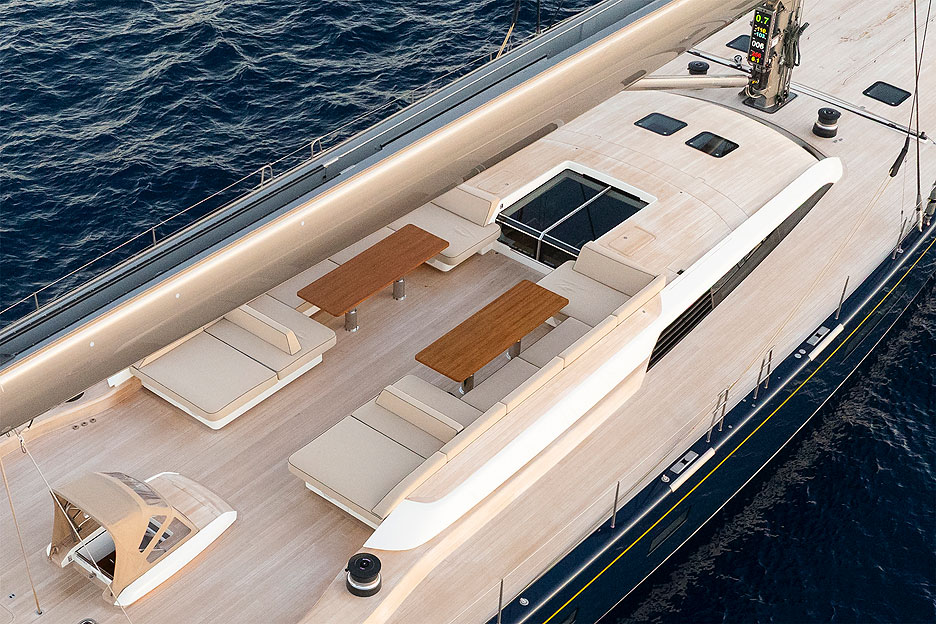
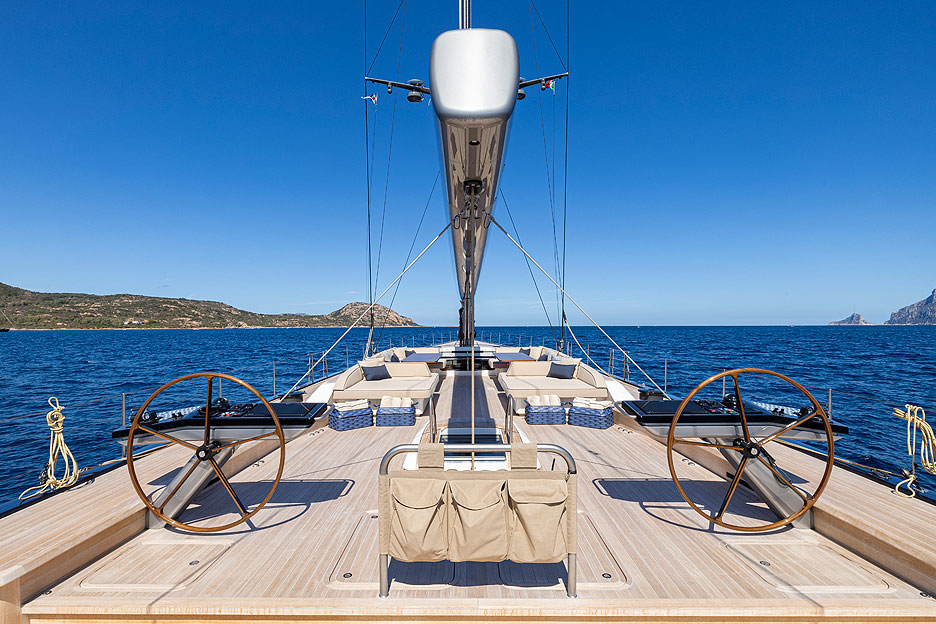
The deck, streamlined superstructure, and coamings are finished in light wood.
The cockpit features the typical three-zone layout found on all Swan models. The guest area near the deckhouse is equipped with classic C-shaped sofas, telescopic tables, and sunpads, and can be protected by a sprayhood and bimini (with an optional retractable rigid version available).
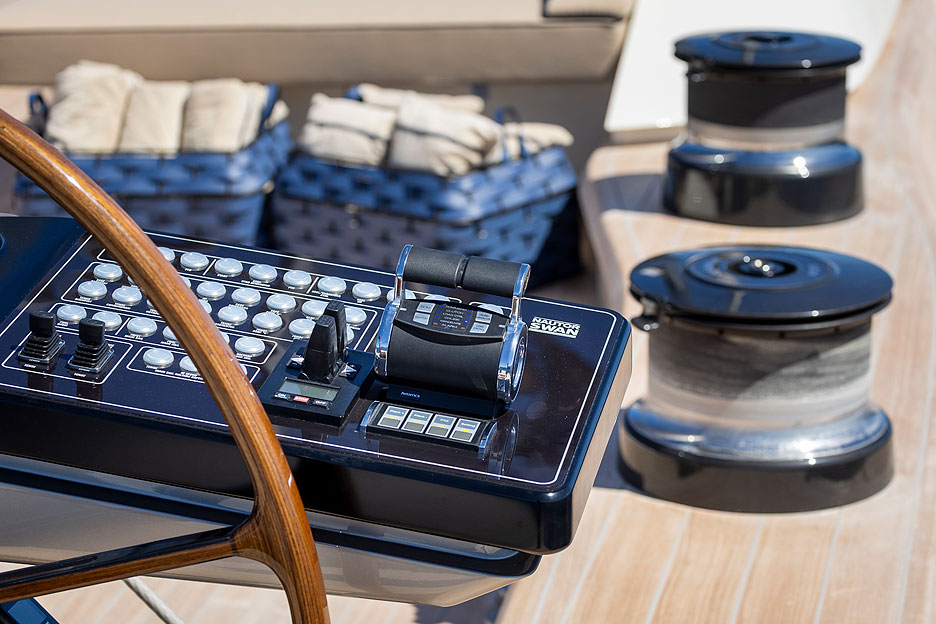
The central zone is the working cockpit, with two helm stations and winches; it also provides a secondary access point from the crew quarters aft.
The entire aft section, separated by a slight level change, is dedicated to the beach club, which seamlessly transitions into a swim platform and can optionally be expanded with a multifunctional platform design exclusive to the latest Swan models. The transom also provides easy access to a garage capable of housing a tender up to 4.5 m in length.
The interior concept of the Swan 128 was developed by designer Misa Poggi, another long-time collaborator of Nautor Swan. Key features of the layout include a forward section with minimal bulkheads (allowing for full customization of the owner’s suite) and fully separated crew quarters in the aft section, with their own access to the working cockpit.
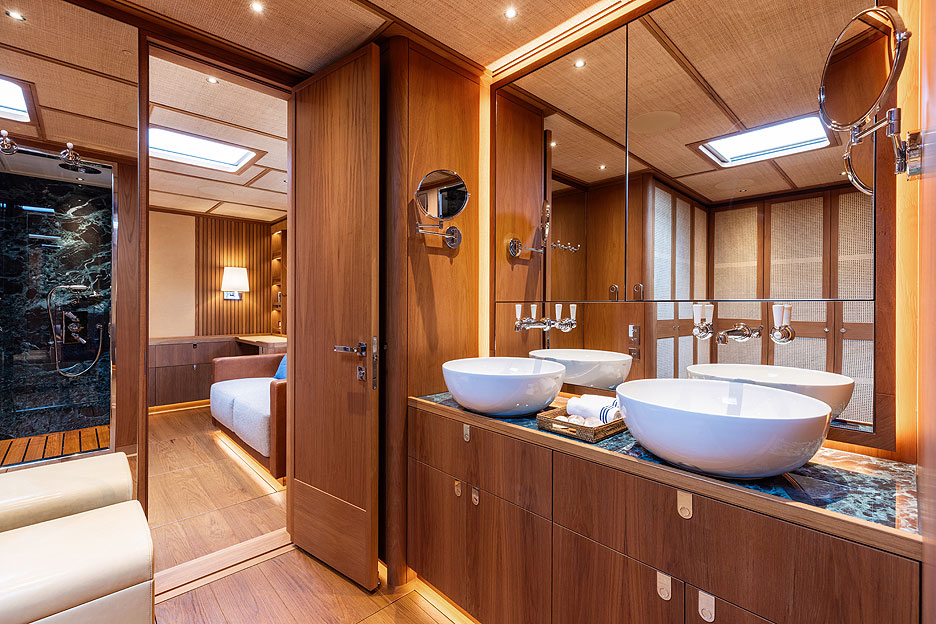
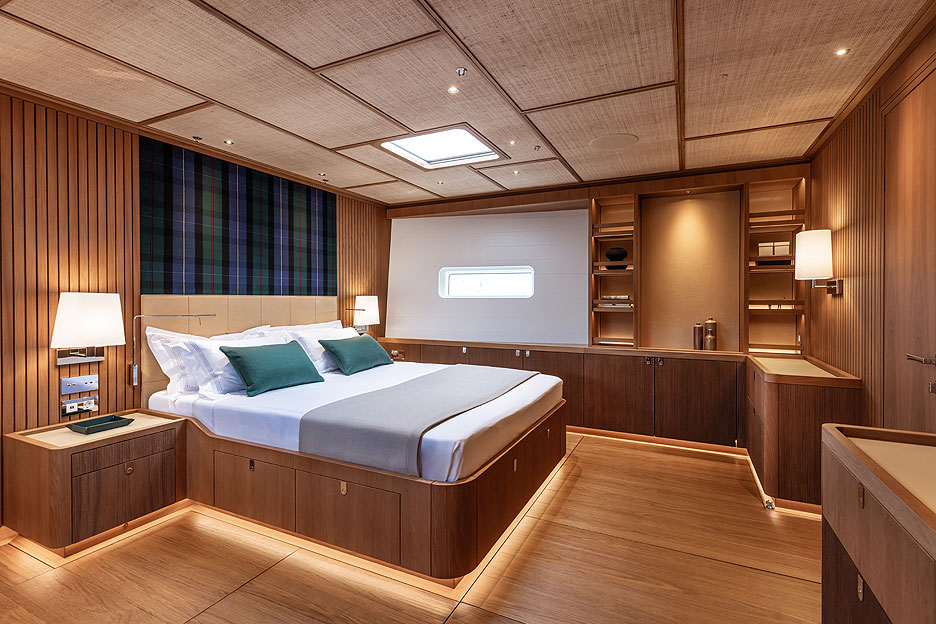
On board Be Cool there are four guest cabins. The owner’s suite, in addition to a large double bed, offers ample space for a private lounge area and dressing table, as well as a bathroom more typical of a motor yacht than a sailing yacht. The VIP cabin features a king-size bed, while two additional guest cabins are equipped with twin beds. Optional configurations include double beds, pullman berths, and bathrooms equipped with bidets.
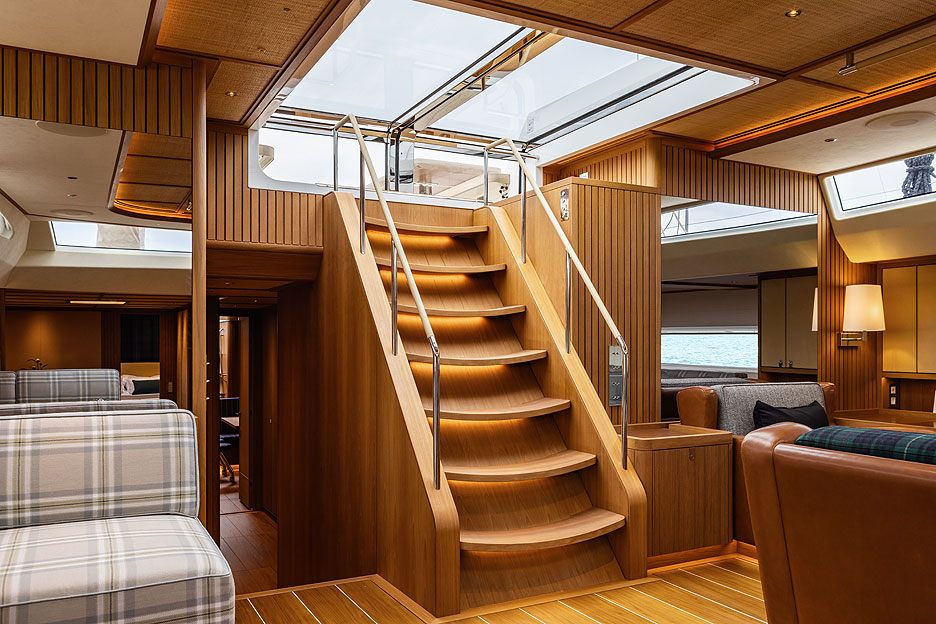
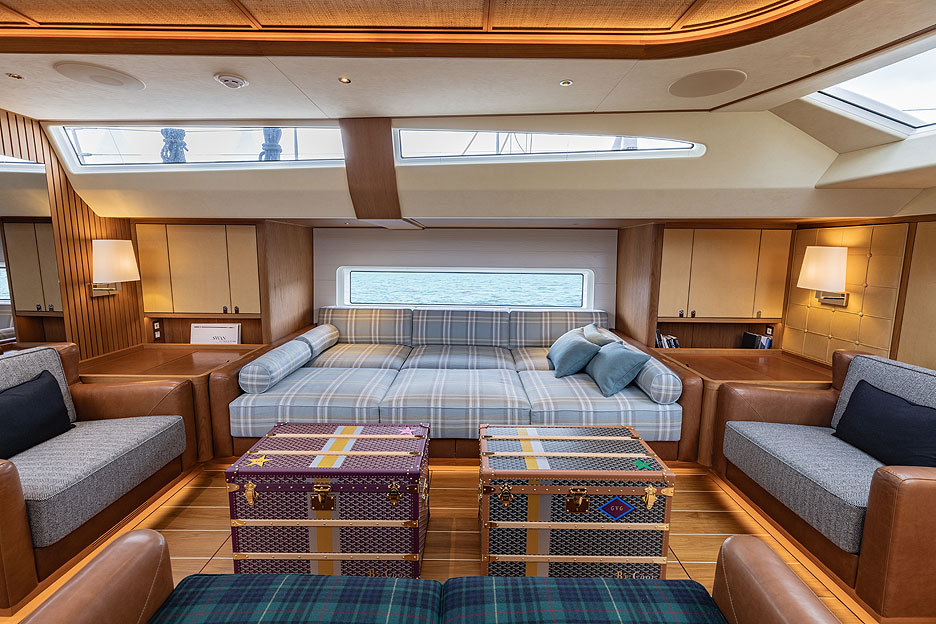
The raised saloon, accessed via a wide companionway, is clearly zoned, though the arrangement of these zones can be customized. In the standard layout, a sofa is positioned centrally to port, a dining table to starboard, and further forward, three steps down, an additional lounge area that can serve as a cinema room. Alternatively, this TV zone can be replaced with a dining area accommodating up to ten guests.
Three crew cabins and a crew mess are located in the aft section, along with the navigation station, a galley with a central island and space for all conceivable equipment, storage areas, and a well-appointed laundry room with ironing facilities.
The shipyard offers a wide selection of wood types, leather, and textiles for the interior, including accessories from Loro Piana Interiors. The Swan 128 is a next-generation flagship that combines the advantages of a high-performance yacht capable of competing in offshore regattas with the comfort of a cruiser designed for transoceanic voyages with family and friends.