

10 facts about Chris-Craft

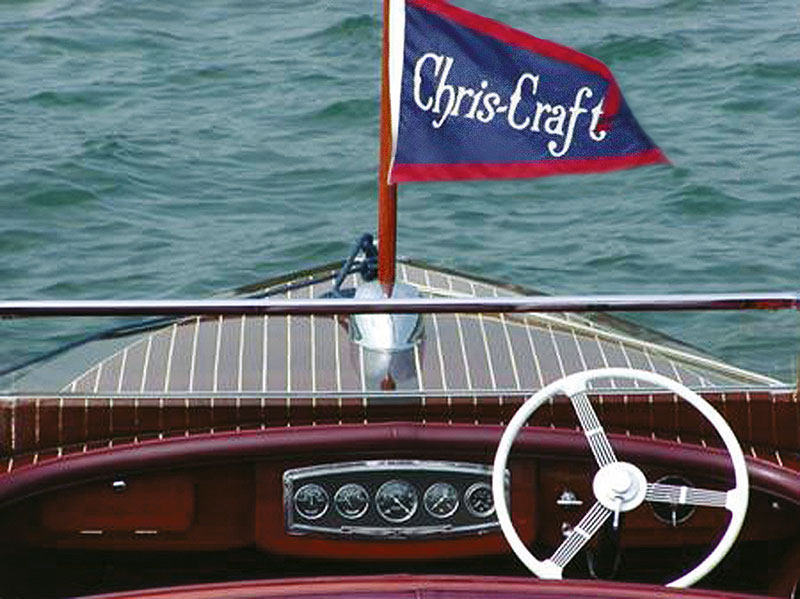
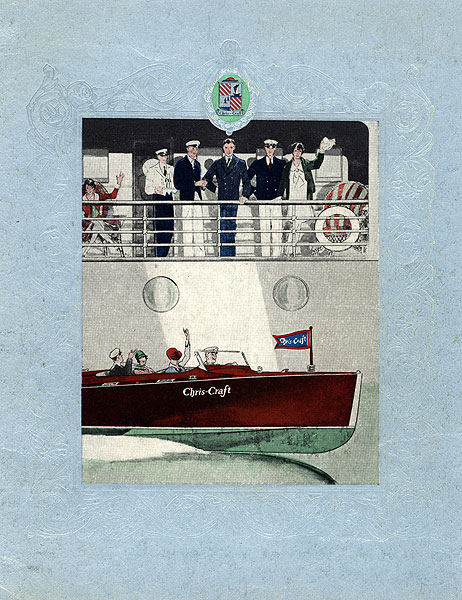
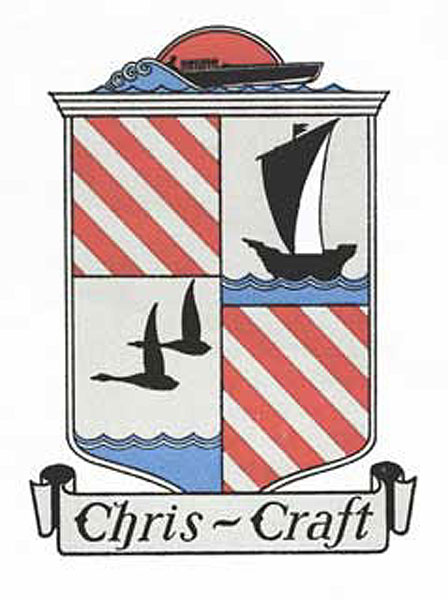
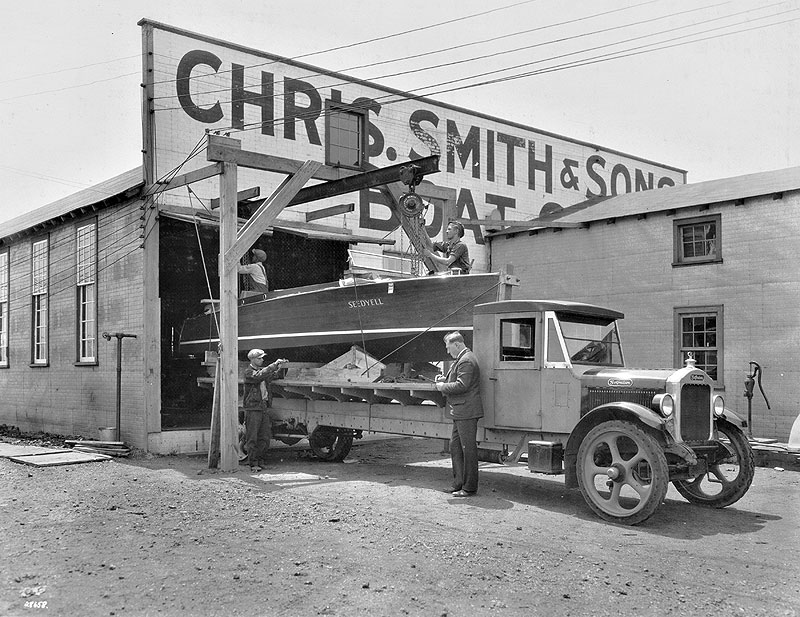
1. Chris-Craft has its own flag, which is placed on the bow, but at the turn of the 1920s the brand also had its own coat of arms. The shield is divided into four parts. Two of them show slanted stripes reminiscent of the deck panelling and stripes on the US flag, while the other two depict a sailing boat and ducks that started this great story. In 1874, 13-year-old Christopher Columbus Smith, who had a passion for duck hunting, built his first riverboat in the town of Algonac on the St Clair River. Seven years later, having matured and earned a reputation as a boat builder, Christopher joined his brother Hank. Together they laid the foundations for a future successful company.
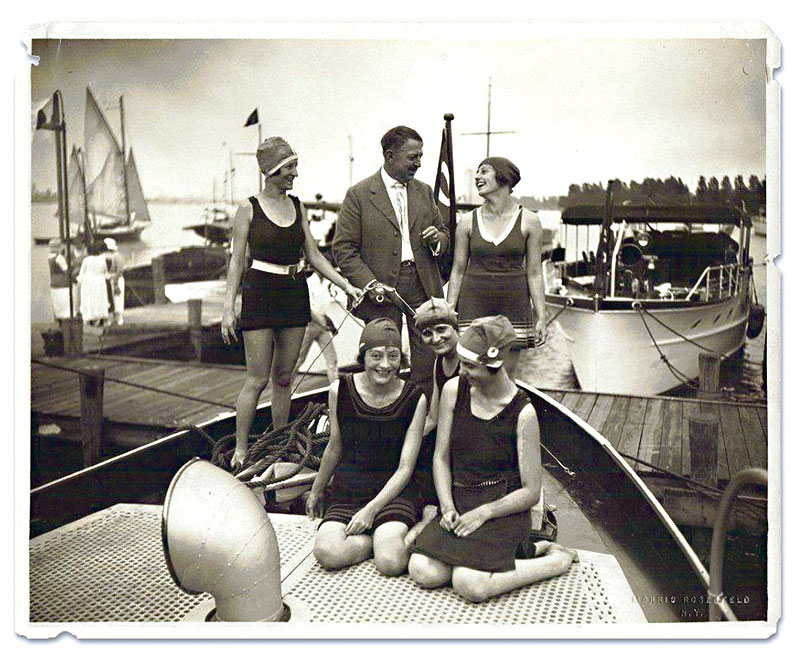
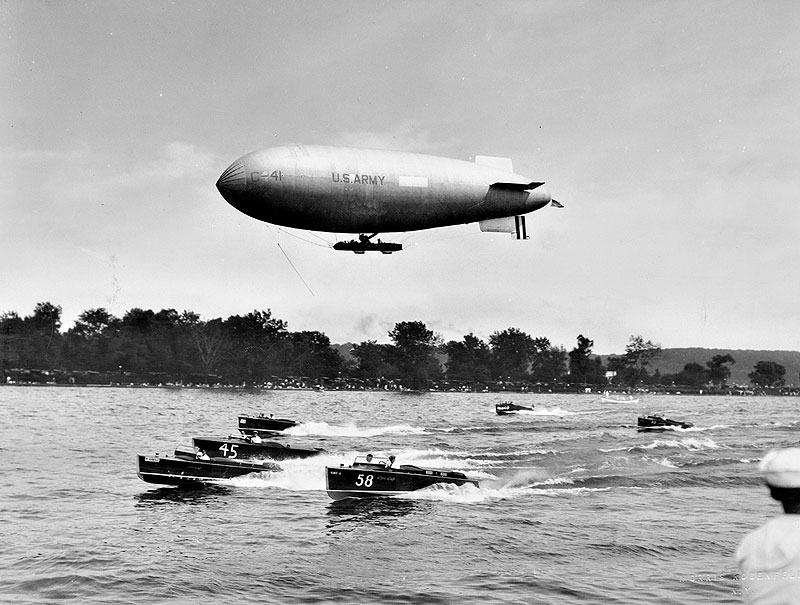
2. In 1910, Chris Smith met John Ryan, the owner of a movie theatre in Cincinnati and a venturesome man by nature. He had a lot of money and an irrepressible passion for competition and betting. Ryan saw great potential in speedboat racing, and he wanted to rub it in the face of an acquaintance who had a boat that could go up to 26 knots. Smith assured him that he would build a boat that could do 30. He succeeded, and Ryan beat every competitor in the neighbourhood. He would eventually become a partner in the new Smith Ryan Boat & Engine Company. The boats were sold under the name Baby Reliance. Their speed reached 50 knots, and the price rose to $20 thousand, which was an impressive sum for those times (about $630 thousand in terms of modern money). In 1914, the speedboat Baby Speed Demon II won the prestigious American Power Boat Association Cup, having raced at an average speed of 50.5 knots. Unfortunately, success played havoc with Ryan. He couldn't overcome his gambling habits and blew a fortune. Left without a partner, Smith renamed the business C. C. Smith Boat & Engine Company.
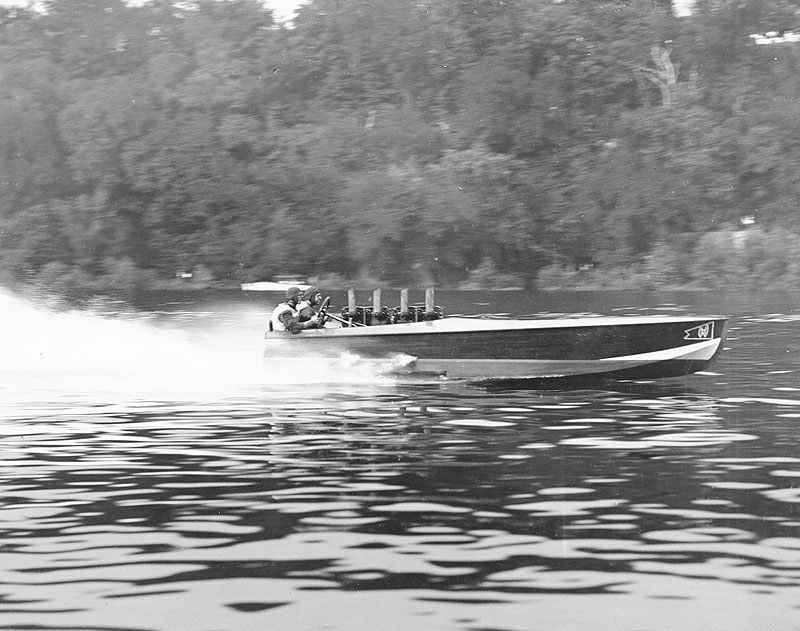
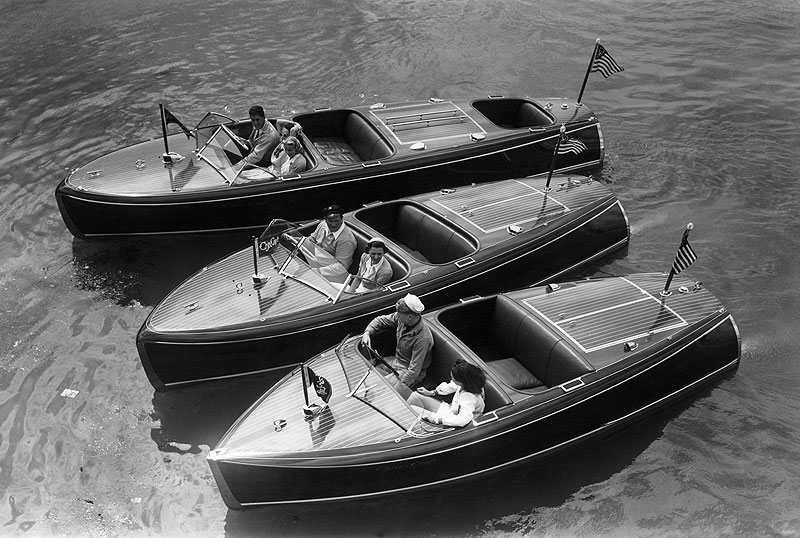
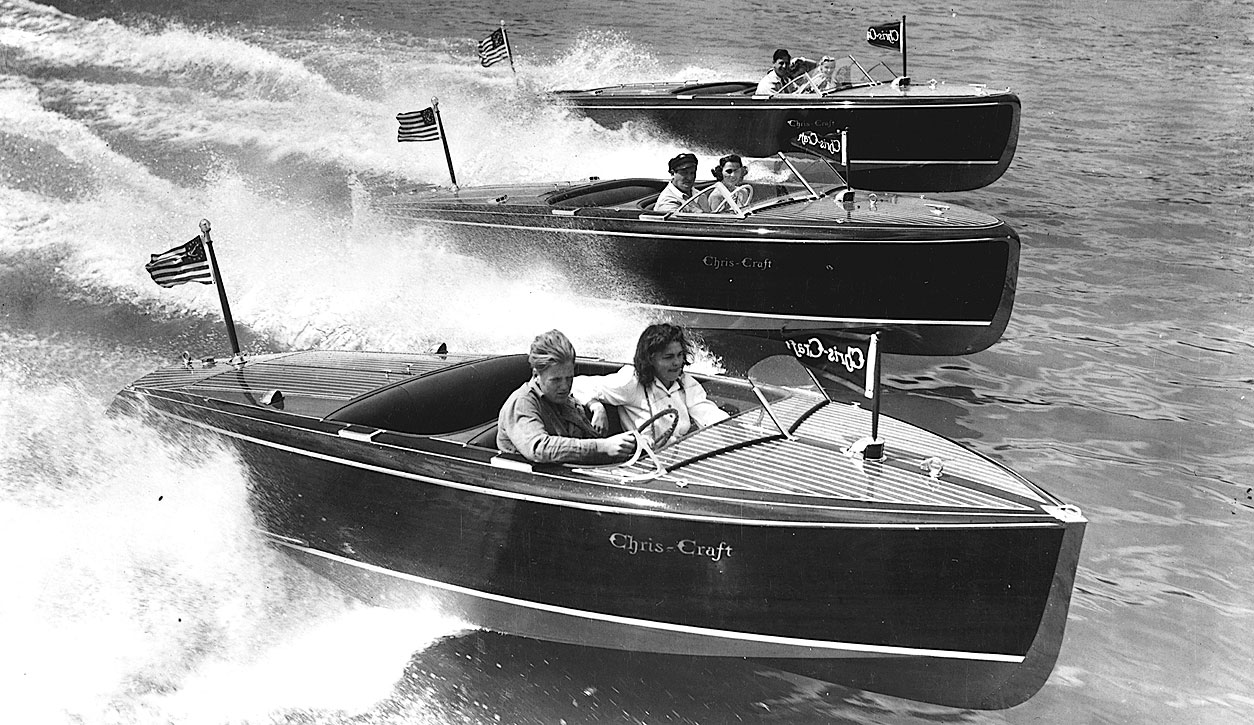
3. In 1915, the Miss Detroit speedboat won the Gold Cup race. A syndicate of investors was formed to develop it, including Detroit car company founders Horace Dodge and Hugh Chalmers, and Ford associate Child Harold Wills. One of Miss Detroit sisterships was demanded by Garfield ‘Gar’ Wood, an engineer, businessman, and water racing fan. A conversation with Smith led to him buying the entire shipyard. He would generate ideas, come up with original technical solutions and try the boats in business, while the Smiths built them. In the winter of 1921-1922, the American Power Boat Association decided to seriously change the racing rules, limiting engine displacement, fixing length and hull contours, which was clearly aimed against Wood's technical advantages. It was the exact time that should be considered the birthday of ‘gentlemen's boats’. Wood and Algonac shipyard chief designer Nap (Napoleon) Lacy worked together to develop a radical new concept for an all-purpose boat — the legendary 33-foot Baby Gar. She featured stunning design, safety and comfort. It had three cockpits and speed characteristics so impeccable that the most famous and wealthy American racers immediately wanted one.
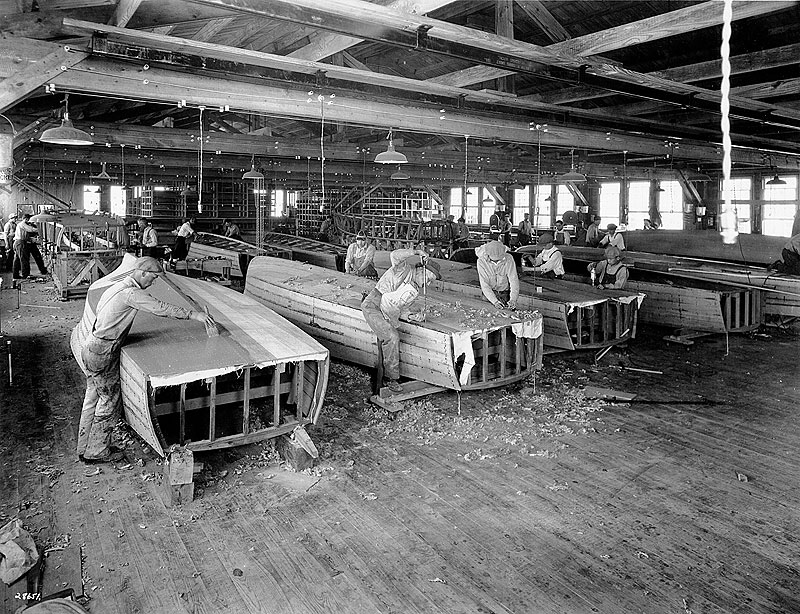
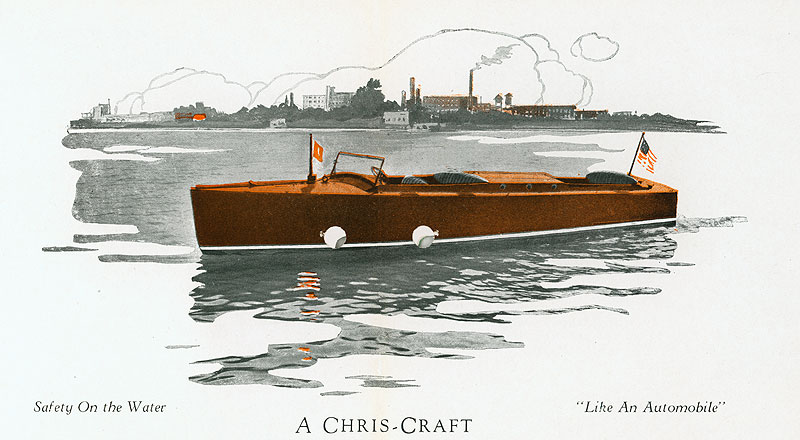
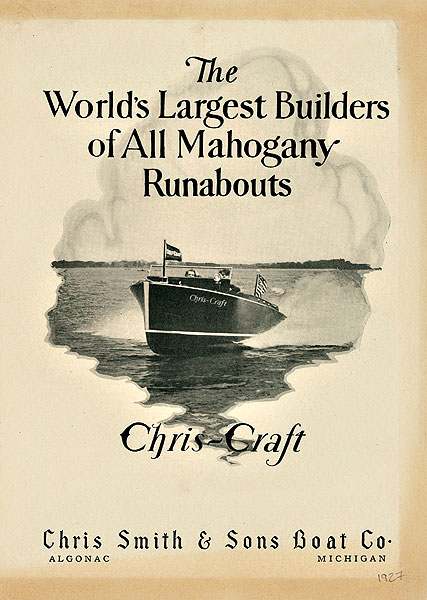
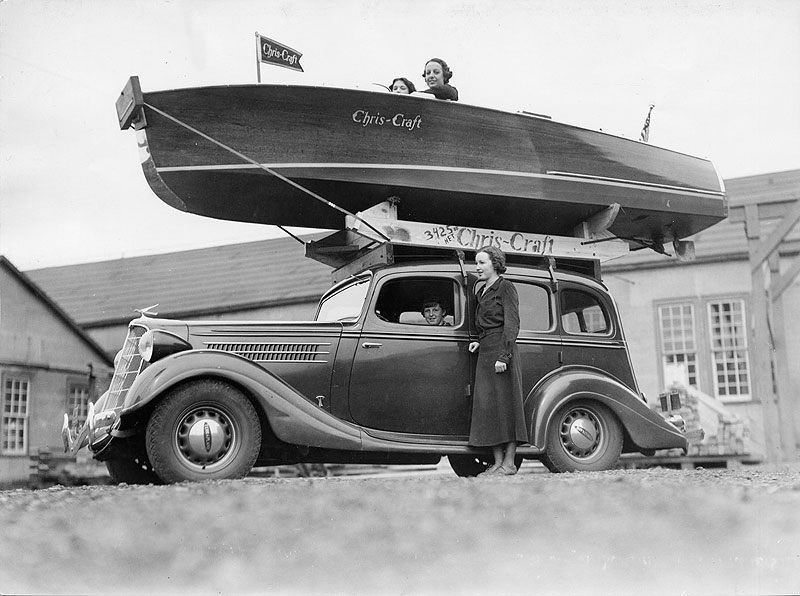
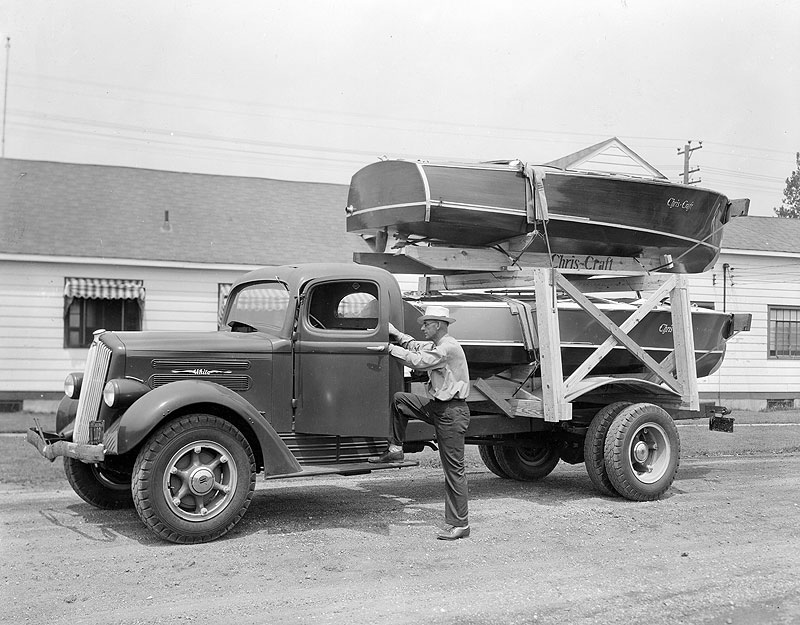
4. Back in the 1910s, Smith and his sons had to work very hard to cope with the flood of orders, and they began to optimise production methods, following in Ford's footsteps. Whereas previously a boat was built by a single craftsman, they had each worker perform one or more operations. As a result, instead of universal craftsmen, they began to hire many medium-skilled workers, who could be quickly trained and their skills improved. Chris-Craft was the first shipbuilding company to adopt the new principles of production. In the 20s, the middle class wanted to join the lifestyle of the elite. Recreational boating became one of the symbols of the era. In essence, Chris-Craft offered affordable luxury. The number of boats produced grew steadily: in 1924 about 50 boats were built, in 1925 — 111, and in 1927 447 boats were delivered, generating the revenue of $1.12 million. At the same time Chris-Craft was recognised as the world's largest manufacturer of wooden motorboats.
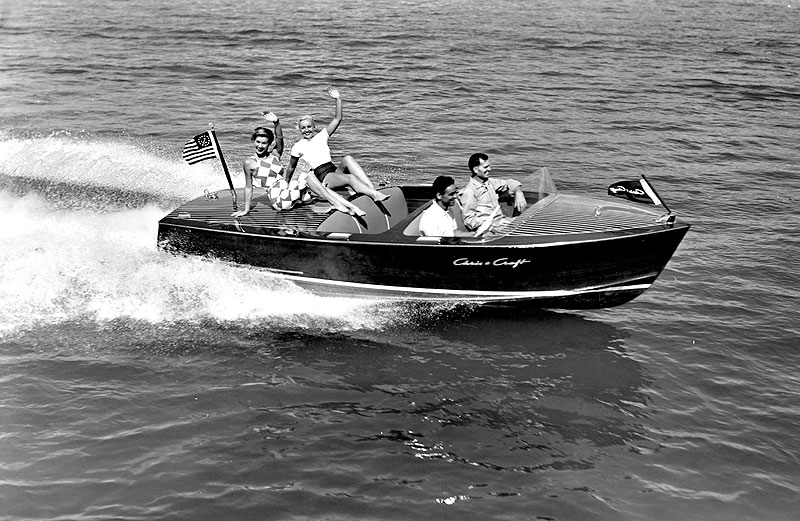
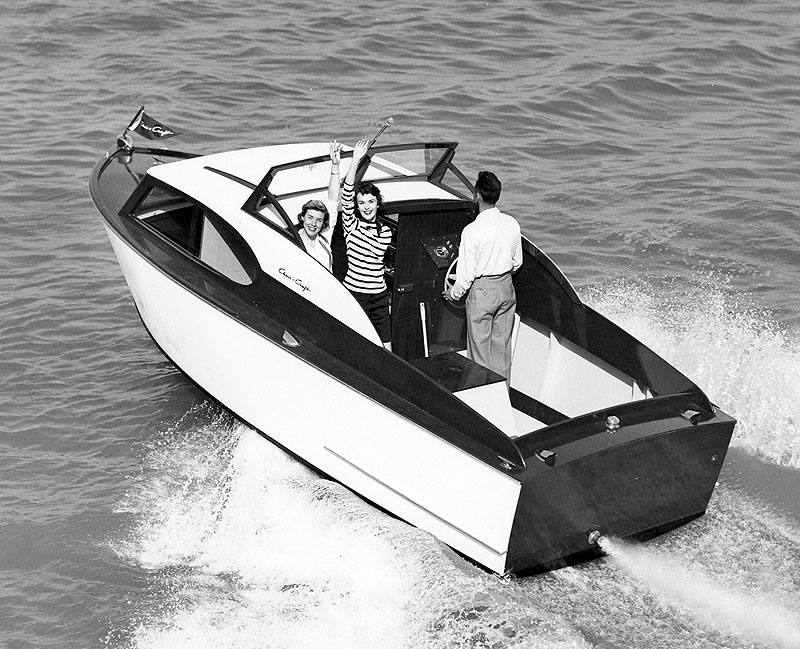
5. The time after the Second World War was golden for Chris-Craft. In the ‘50s, the brand came up with an ingenious marketing ploy. Three small motorboats, the 8-foot Pram and the 14-foot Rowboat and Kit Boat, were sold disassembled. Popular Mechanics magazine printed pieces on how to assemble them at home. The customer received a box with parts and detailed assembly instructions. The outboard motor was purchased separately. What's more, they were advertised as a great way for fathers to have fun and spend time with their sons, a kind of constructor for adults and children. It really was a ‘handmade family boat’! Prices were reduced because they saved on the labour of the workers. The range of models kept expanding and eventually reached 31-footers. Such a parcel weighed 2.2 tonnes and cost $1995, while a factory-built boat cost $10,000. A special collapsible model was made in 1953 as an homage to the first boat on which Christopher Columbus Smith had hunted ducks eighty years before. Then, also in the ‘50s, Chris-Craft was trying its hand at trailer manufacturing. The motorhome, as well as some models of boats, buyers assembled themselves. This model was called... Land Cruiser.

6. By the way, without Chris-Craft engines, Carlo Riva's rise might not have happened. When he wanted to take the family boat business to the next level, he was faced with a lack of suitable engines in Italy. Powerful engines were available, but they were only good for racing and not for everyday use. The only way to find engines for ‘gentlemen's boats’ was to source them overseas. Riva was eager to get Chris-Craft engines for his models at any cost and flew to the USA for negotiations. The company treated him kindly, but set a condition: the minimum order — 50 pieces. The money was enough for only six, and he told the Americans without blinking an eye that the Italian government limited the import of foreign engines to a batch of six. The order was split into parts, and he received the coveted instalments.
7. Chris-Craft's famous fans cannot be counted. We will especially remember Elvis Presley, who loved to chase everywhere - on land and on water. He bought his snow-white wooden 18-foot Chris-Craft Cavallier in 1963 and named it after his hit song Hound Dog.
8. In 1960s, ‘Chris-Craft’ became a household name like ‘Xerox’ or ‘Jeep’. This is well evident in the first part of the Fantomas trilogy. To evade pursuit, the number one villain calls for a ‘Chris-Craft’, but driving it... Riva Ariston.
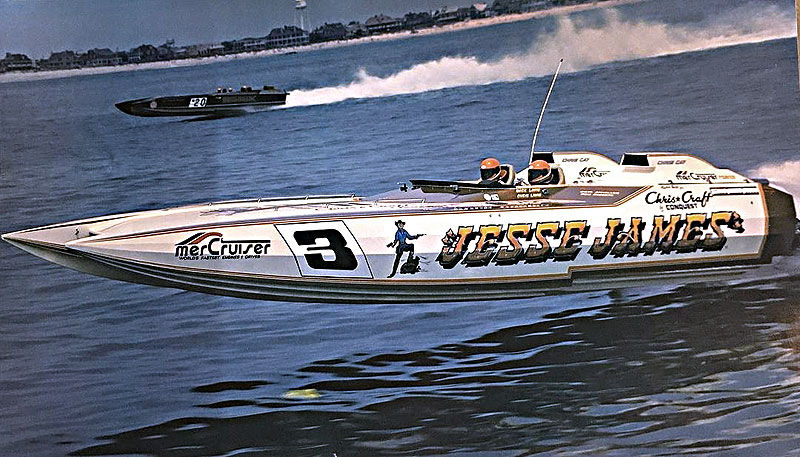
9. In 1980s, Chris-Craft produced 300 Chris-Cat racing catamarans. The boat, named Jesse James (in honour of the famous Wild West outlaw!) was the 1984 and 1985 US Champion and set a speed record of 101.3 knots. She was built in 1983 for Mark and Chris Lavin, brothers-developers from Connecticut. Jesse James was powered by a pair of 350 hp Chevrolet engines, which were later replaced by two 400 hp Mercruiser engines.
10. In 2001, the legendary but faded Chris-Craft brand was acquired by Stephen Julius and Stephen Heath. Their company, Stellican, specialised in reviving and modernising brands with a long history and high quality products for resale. Between 1998 and 1999 they did the same with Riva, which eventually became the jewel of the Ferretti Group. The companions owned Chris-Craft until 2018, when they exited in a deal with Winnebago. Heath remained CEO of the company.